










Dubai: Honoring its past, shaping the future
Back To Main Page: Economy and Business, UAE News
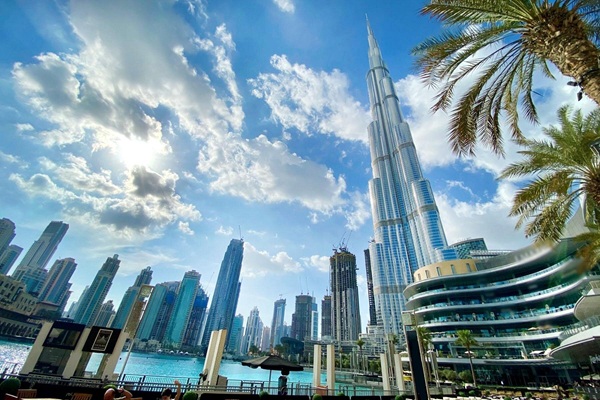
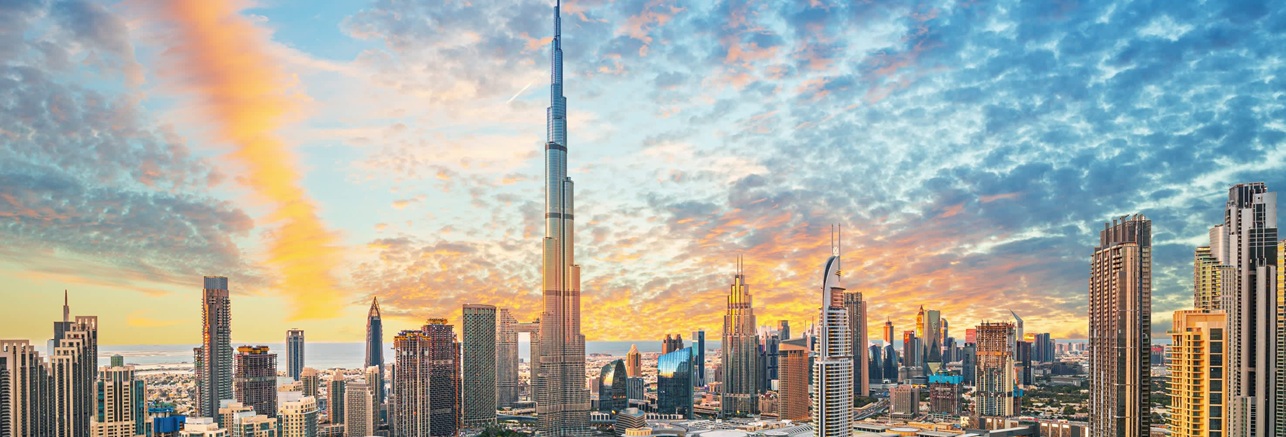
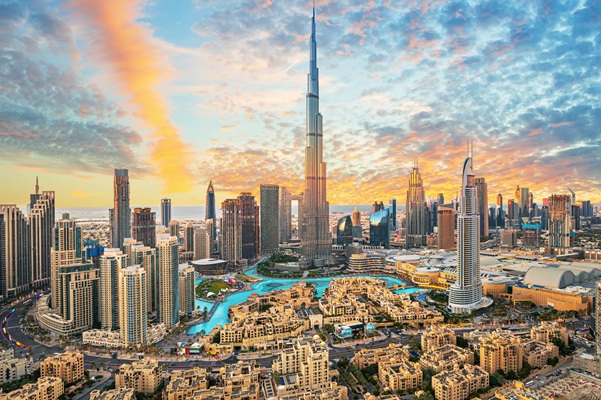
Dubai is often described through its skyline, speed, and scale. Yet what truly defines the city is not what rises above the ground, but the clarity of thought that shapes everything beneath it. Built on the conviction that progress is never accidental, Dubai has approached development as a process that is planned, measured, and executed with intent. At a time of global economic uncertainty and cautious growth, the emirate continues to move decisively forward—translating vision into structure and ambition into results. Its latest economic performance does more than signal momentum; it reflects a city that has institutionalised foresight and converted long-term vision into sustained economic strength.
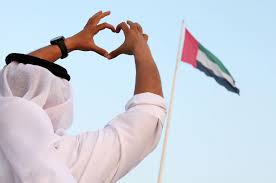
This forward orientation is deliberate. Dubai respects its past but refuses to be constrained by it. Unlike cities that define themselves through history, Dubai defines itself through direction, by what it intends to become. Vision, clarity, and momentum are not abstract ideals here; they are the foundations of the city’s identity and, increasingly, the drivers of its economic success.
Guided by bold leadership and long-term thinking, Dubai operates on a simple yet powerful belief: the future can be designed. That belief has shaped a city where ideas consistently become reality, often ahead of global timelines. From pioneering architecture and smart-city infrastructure to artificial intelligence, digital governance, sustainability, and space exploration, innovation in Dubai is not a slogan, it is a system. And that system is now delivering measurable results.
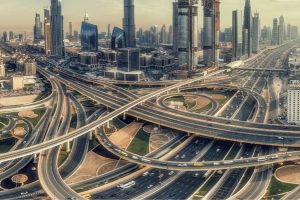
Vision Reflected in Economic Performance
Dubai’s economy exceeded expectations in the first half of 2025, maintaining strong upward momentum despite global uncertainty. While the International Monetary Fund forecast global growth of 3.4% for the year, Dubai outperformed decisively, recording a GDP of AED 241 billion in H1 2025, including AED 122 billion in the second quarter alone.
This represents 4.4% growth in the first half of the year and 4.7% growth in Q2, year on year—figures that underscore Dubai’s resilience and reinforce its position as one of the world’s leading economic cities.
According to His Excellency Helal Saeed Almarri, Director General of the Dubai Department of Economy and Tourism (DET), the results reflect both leadership and adaptability.
“Dubai’s first-half GDP performance underpins the strong vision and leadership of His Highness Sheikh Mohammed bin Rashid Al Maktoum,” Almarri said, “highlighting our city’s ability to adapt to shifting global dynamics while advancing toward the long-term objectives of the Dubai Economic Agenda, D33.”
He added that the performance also demonstrates the effectiveness of government–private sector partnerships, characterised by strategic alignment and shared ambition. “Dubai continues to attract investors, entrepreneurs, and talent from around the world, while developing homegrown capabilities and positioning itself as a launchpad for global expansion.”
These figures are not the result of short-term stimulus. They are the outcome of a deliberately engineered ecosystem designed for speed, clarity, and scale.
What Truly Distinguishes Dubai is Certainty
In Dubai, uncertainty has been engineered out of daily life. Visas have clear timelines. Regulations are defined. Systems are designed to remove ambiguity rather than tolerate it. You always know where you stand—and where you are going.
This clarity forms an unspoken social contract: come from anywhere, believe whatever you wish quietly, work hard, and move fast. As Sheikh Mohammed bin Rashid Al Maktoum once said, “whether you are a gazelle or a lion, when the sun rises in Dubai, you must run.” High rents, school fees, and the city’s relentless pace do not allow inertia.
Some interpret this as harsh. Others call it soulless. But Dubai does not perform complexity to prove depth. It invests in movement, structure, and possibility. It chose momentum over nostalgia and in doing so, honoured the past by building the future fast.
A Diversified, Future-Ready Economy
Dubai’s growth in 2025 has been broad-based, driven by strong performance across key sectors that underpin sustainable development and long-term resilience.
The human health and social work sector recorded the highest growth, expanding 20% in H1 2025 to reach AED 3.3 billion, contributing 1.4% to overall GDP growth—reflecting sustained investment in quality-of-life infrastructure.
The construction sector maintained robust momentum, growing 8.5% year on year with a value added of AED 16 billion, contributing 6.7% to GDP. In Q2 alone, construction activity surged 14.9%, supported by increased government spending on development and infrastructure projects.
Real estate activities expanded 7% in H1 2025, reaching AED 19.8 billion, reinforcing Dubai’s role as a global property and investment hub. The financial and insurance sector grew 6.7%, contributing 12.5% to GDP, while information and communications expanded 5.3%, underscoring the emirate’s transition toward a knowledge-based economy.
Tourism, Retail, and the Power of Experience
A key contributor to this momentum has been tourism and retail – sectors where Dubai continues to blend economic impact with global appeal. A major highlight of December was the launch of the Dubai Shopping Festival, which once again demonstrated the city’s ability to convert large-scale experiences into measurable economic activity.
The festival drew millions of visitors, driven by city-wide retail promotions, entertainment events, and cultural programming. More than a seasonal attraction, the Dubai Shopping Festival functions as a powerful economic driver, stimulating retail spending, boosting hotel occupancy, supporting small and large businesses alike, and reinforcing Dubai’s position as one of the world’s most attractive leisure and shopping destinations.
This dynamic is reflected in the performance of the wholesale and retail trade sector, Dubai’s largest economic contributor, which reached AED 57.4 billion in H1 2025, accounting for nearly 24% of GDP. Accommodation and food services also recorded steady growth, aligned with strong tourism flows and rising visitor numbers.
Digital Transformation and Data-Driven Governance
Dubai’s economic momentum is not accidental—it is data-driven and digitally enabled.
His Excellency Hamad Obaid Al Mansoori, Director General of Digital Dubai, noted that the emirate’s performance highlights “the strength, resilience, and dynamism of its economy” and its ability to sustain long-term competitiveness.
“At Digital Dubai, we are proud to support this journey by accelerating digital transformation, advancing technology adoption across all sectors, and enhancing operational efficiency,” he said, reinforcing Dubai’s ambition to become a global digital capital.
Younus Al Nasser, CEO of the Dubai Data and Statistics Establishment, emphasised the role of real-time data and public–private collaboration, noting that Dubai is increasingly powered by innovation, analytics, and evidence-based decision-making.
A Business Ecosystem Built for Scale
According to His Excellency Hadi Badri, CEO of the Dubai Economic Development Corporation (DEDC), Dubai’s robust expansion particularly in health, construction, real estate, and financial services is the direct result of a business ecosystem designed for agility, competitiveness, and scale.
“Innovation-friendly policies continue to attract high-value investment and create new growth pathways,” he said, adding that Dubai is now entering a phase focused on deeper diversification and sustained global competitiveness.
Dubai’s story is not defined by scale alone, but by intent. Its success lies in the discipline to turn vision into systems, ambition into execution, and momentum into measurable outcomes. Dubai does not wait for the future—it designs it clearly, decisively, and at speed. And that is what sets the city apart.