

















The Russian Embassy in Abu Dhabi: History, diplomacy, and the Arabist tradition
Back To Main Page: Diplomatic News, UAE News
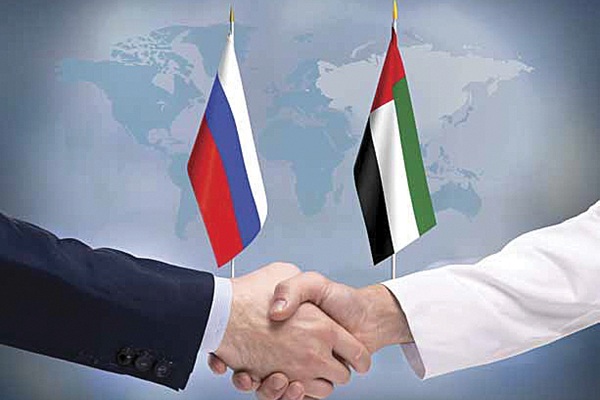
Long before the Gulf emerged as a central crossroads of global diplomacy, the Soviet Union had already fixed its gaze on the newly formed United Arab Emirates. Today, more than five decades after diplomatic relations were first established, the Embassy of the Russian Federation in Abu Dhabi stands as one of the capital’s most enduring foreign missions an institution shaped by history, language, and a distinctive diplomatic culture rooted in deep knowledge of the Arab world.
“The Russian Embassy in Abu Dhabi is not only a diplomatic post, it is an archive of regional memory.”
Recognition at the birth of a nation
Diplomatic relations between the Union of Soviet Socialist Republics and the UAE were established on 8 December 1971, just days after the federation came into being. This early recognition placed Moscow among the first major powers to engage with the new state.
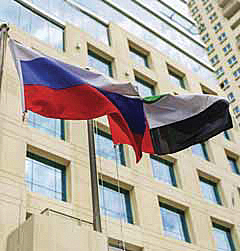
At the height of the Cold War, this decision carried significant weight. For the Soviet Union, engagement with the Gulf was both strategic and forward-looking. For the UAE, it reflected a diplomatic philosophy grounded in balance, sovereignty, and dialogue with global powers.
The Embassy Opens: A Permanent Presence
The Soviet Embassy in Abu Dhabi officially opened in 1986, marking the beginning of a permanent diplomatic presence. The compound, still operating from the same location today, soon became a recognizable landmark within the capital’s diplomatic quarter.
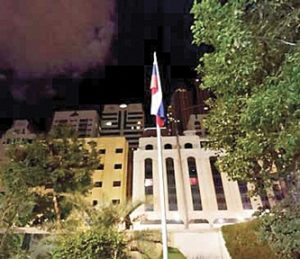
From the outset, the mission extended far beyond protocol. It functioned as a political listening post, a cultural bridge, and a center for regional analysis, covering not only bilateral relations but developments across the Gulf and the wider Arab world.
1991: Change Without Rupture
When the Soviet Union dissolved in 1991, many diplomatic missions around the world faced uncertainty. In Abu Dhabi, however, continuity prevailed. The Russian Federation seamlessly assumed responsibility for the embassy, preserving staff, institutional memory, and long-established relationships.
This uninterrupted presence allowed Russia to maintain deep insight into Gulf affairs at a time of global transformation.
“In Abu Dhabi, Russian diplomacy did not restart, it continued.”
The Arabist Tradition: Diplomacy Through Knowledge
One of the most defining features of Russian diplomacy in the Middle East has been its reliance on Arabists—career diplomats trained not only in politics, but also in Arabic language, history, and culture.
Among the most notable ambassadors to the UAE:
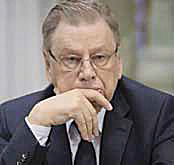
Sergey Kirpichenko – a distinguished Middle East specialist who served in the late 1990s before later representing Russia in Egypt and at the Arab League. Fluent in Arabic, he was widely respected for engaging leaders and intellectuals within their own cultural and historical frameworks.
Konstantin Kharchev – Serving during the critical transition from the USSR to the Russian Federation (1990–1992), he played a stabilizing role during institutional upheaval, ensuring continuity in Russia–UAE relations.
“Russian ambassadors to the UAE were not visitors, they were scholars of the Arab world.”
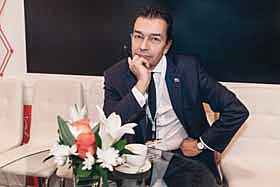
These diplomats embodied a philosophy in which language and cultural literacy were not formalities, but strategic tools.
A Regional Hub in the Gulf
While Abu Dhabi serves as the UAE’s federal capital, the Russian Embassy’s influence has often extended far beyond bilateral relations. Over the decades, it has functioned as a regional coordination hub for Moscow’s engagement with the Gulf Cooperation Council and the broader Middle East.
Key areas of engagement include:
Political dialogue on regional developments
Strategic and security consultations
Energy diplomacy and economic cooperation
Multilateral coordination with Arab states
Equally important has been the embassy’s analytical role—monitoring regional dynamics and advising Moscow on evolving geopolitical realities.
Diplomacy Beyond Politics: Culture and Memory
The Russian Embassy in Abu Dhabi is also a central platform for cultural diplomacy. Its events are among the most anticipated within diplomatic and expatriate communities, reinforcing its role as both a political and cultural institution.
Timeline: Key Milestones
1971 – Diplomatic relations established between the USSR and the UAE
1986 – Opening of the Soviet Embassy in Abu Dhabi
1991 – Russian Federation assumes the mission
1990s–2000s – Arabist diplomats deepen regional engagement
2002 – Russian Consulate General opens in Dubai
2010s – Expansion of economic and strategic cooperation
2021 – Appointment of Timur Zabirov as Ambassador to the UAE
Today, the Russian Embassy in Abu Dhabi stands as a rare example of diplomatic continuity in a rapidly changing region. Its history mirrors Russia’s own transformation from the Soviet era to the modern federation while its approach to the Arab world has remained remarkably consistent: engagement grounded in knowledge, respect, and long-term presence.
“In a region defined by change, the Russian Embassy in Abu Dhabi represents continuity.”
A Personal Perspective: Diplomacy as an Institution
Having lived and worked in the UAE since 1990, and having founded a Russian magazine in 1995, I have had the privilege of observing diplomatic life from its formative years to its emergence as a global hub.
Over the decades, I visited many embassies in Abu Dhabi and Dubai. Yet the Russian Embassy always stood apart. Each visit left a lasting impression: this was not merely an embassy—it felt like an institution.
“Each time I entered the Russian Embassy, I felt I was walking into an institution—not a building.”
What impressed us most, as journalists, was not only the architecture or the formality, but the people. Russian diplomats—both during the Soviet era and under the Russian Federation—were distinctly different.
They spoke Arabic fluently.
They understood Arab history, mentality, and sensitivities.
And often, they understood the region with a depth rarely encountered elsewhere.
Among journalists, we came to call them al-Mashriqiyyīn – Arabists of the East. Not outsiders observing the region, but scholars immersed in it; not temporary envoys, but long-term students of its people and culture.
“They were not diplomats passing through the region, they were Arabists who lived it.”
Through them, one could sense how Moscow viewed the Middle East: not as a short-term arena of interests, but as a region deserving long engagement, cultural literacy, and respect.
The embassy itself reflected this philosophy. It projected not only policy positions, but a civilizational presence articulating Russia’s worldview and its historical connection to the region.
For many in the media, the Russian Embassy in Abu Dhabi became a reference point: a place where diplomacy was deep, where culture and politics were inseparable, and where continuity truly mattered.
Author: Rita Boustany