




















Wave of Technical Failures Across the US Raises Questions Over Cybersecurity and Critical Infrastructure
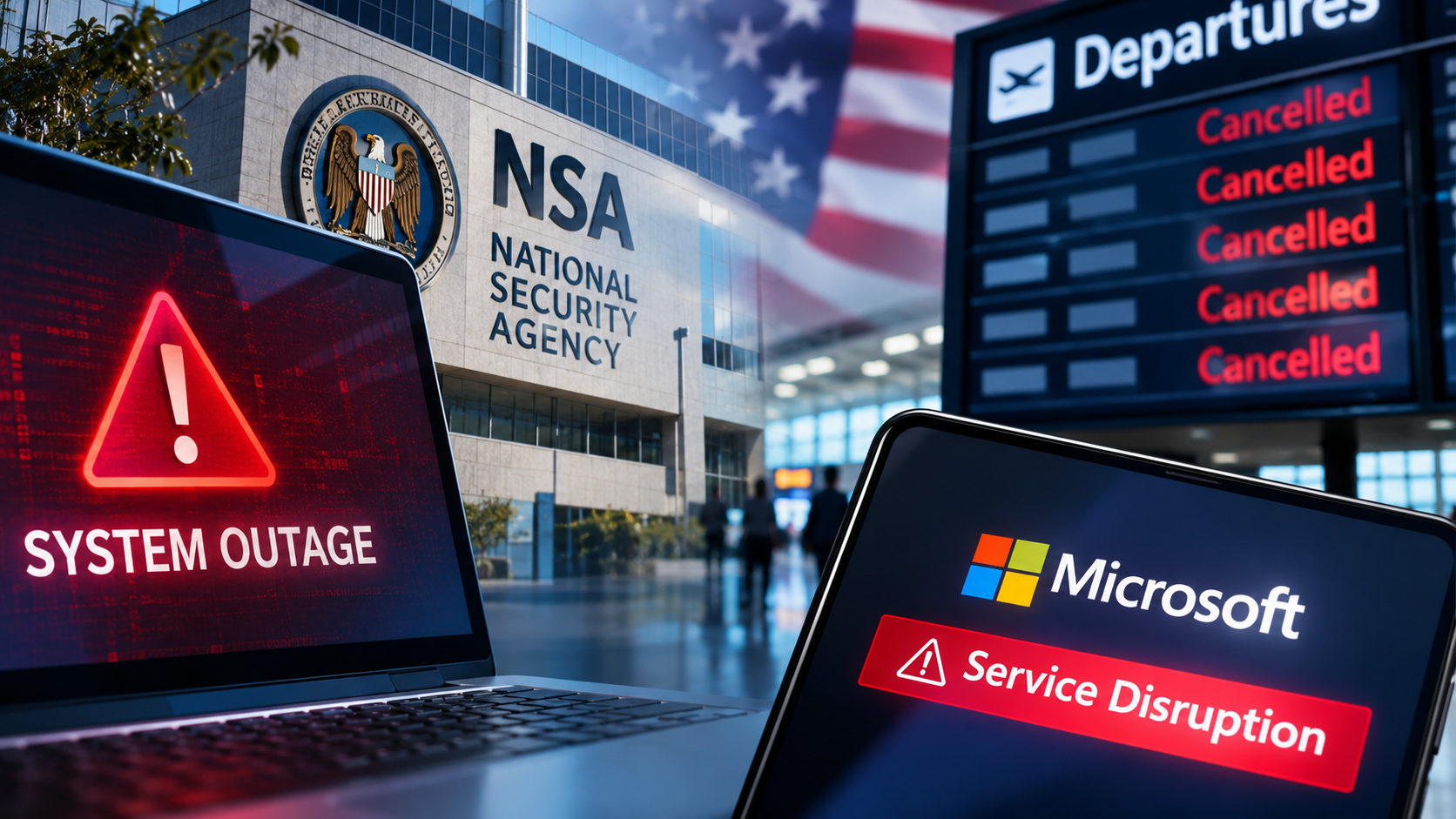
From nationwide aviation disruptions and Microsoft service outages to a classified communications network failure at the National Security Agency, a series of incidents has sparked growing concerns over the resilience of America's digital infrastructure, despite official assurances that there is no evidence of coordinated cyberattacks.
Aviamost News – International News and Analysis
Washington, 18 November 2026 – A succession of major technical disruptions across the United States has raised serious questions about the security and reliability of the country's critical infrastructure, as federal authorities seek to reassure the public that there is no evidence linking the incidents to malicious cyber activity.
The disruptions, which began late last week, have affected several strategically important sectors, including Microsoft services, the national aviation system and an internal communications network operated by the US National Security Agency (NSA).
Although officials have rejected suggestions of a coordinated cyberattack, the absence of a comprehensive explanation for the incidents has intensified scrutiny of the country's technological vulnerabilities and its ability to protect essential systems.
Aviation Disruptions Raise Questions Over System Reliability
Among the most significant incidents was a major disruption to US air traffic operations, which triggered widespread flight cancellations and delays.
According to reports cited by The Washington Post, the Federal Aviation Administration (FAA) linked the aviation disruption to the shutdown of routing equipment during technical work.
However, US Transportation Secretary Sean Duffy acknowledged that the precise cause of the equipment failure had not yet been determined.
Federal aviation officials also dismissed speculation that artificial intelligence had played a role in the incident.
Intelligence assessments have reportedly found no evidence of a cyber intrusion, although questions remain about the technical circumstances that led to the disruption.
The incident has renewed concerns over the resilience of America's air traffic control infrastructure, particularly as authorities continue efforts to modernise ageing systems while maintaining the safety and efficiency of one of the world's busiest aviation networks.
National Security Agency Reports Classified Network Disruption
The latest incident involved the National Security Agency, one of the United States' most sensitive intelligence organisations.
On Tuesday, the NSA acknowledged that several internal systems had experienced temporary disruptions during routine maintenance, following media reports of an outage affecting a highly classified internal communications network.
The agency emphasised that its essential operational capabilities remained fully functional despite the interruption.
CNN, citing sources familiar with the situation, reported that there was no evidence suggesting the classified network had been targeted by a cyberattack.
Nevertheless, the incident has attracted considerable attention because of the NSA's central role in signals intelligence, national security and cybersecurity operations.
The disruption also came amid growing concerns in Washington about the potential vulnerability of government systems to technical failures and hostile cyber activity.
Congress Demands Answers and Greater Transparency
The succession of incidents has prompted calls from US lawmakers for a detailed explanation of the failures and their possible implications for national security.
House Democratic leader Hakeem Jeffries expressed concern over the recent disruptions, particularly the uncertainty surrounding their causes.
He called for a high-level government briefing for congressional leaders from both parties, arguing that lawmakers need a clearer understanding of whether the incidents resulted from infrastructure weaknesses, operational failures or potentially malicious activity.
Meanwhile, Senate Republican leader John Thune highlighted the importance of strengthening America's cybersecurity defences across essential sectors, including banking, transportation and telecommunications.
Thune also warned about the continuing threat posed by hostile actors seeking to exploit weaknesses in US infrastructure.
He noted that questions surrounding the financing of improvements to the national air traffic control system had yet to be fully resolved.
The congressional response reflects broader concerns that repeated technical disruptions, even when unrelated, can expose weaknesses in systems that are essential to economic activity and national security.
Former CIA Officer Warns of Wider Security Implications
Former Central Intelligence Agency officer Lindsay Moran has warned that the repeated disruptions have reached a level that warrants serious concern, not only for Americans but also for the international community.
Speaking during an analysis broadcast on Al Jazeera, Moran argued that the consequences of major infrastructure failures in the United States could extend far beyond its borders, given Washington's central role in international security, financial markets and global communications.
She questioned whether explanations involving human error, inadequate management or difficulties associated with technological modernisation would remain convincing if similar incidents continued.
According to Moran, national security officials and the White House must provide clear and transparent explanations to restore public confidence.
She also suggested that categorical official denials of cyberattacks, without sufficiently detailed explanations of the underlying failures, could fuel public speculation about possible foreign involvement.
Moran attributed the broader problem to what she described as management shortcomings and weaknesses in senior appointments within the current US administration.
Her assessment represents a critical interpretation of the incidents rather than an established finding about their causes.
Cyberattack Fears Persist Despite Official Denials
Despite heightened public concern, US authorities have maintained that available intelligence does not indicate that the disruptions were part of a coordinated cyber operation.
Officials have also stressed that the incidents should not automatically be treated as connected simply because they occurred within a short period.
Nevertheless, the combination of aviation failures, interruptions to widely used digital services and disruptions within a major intelligence agency has brought renewed attention to the complexity of protecting interconnected technological systems.
Modern infrastructure increasingly depends on sophisticated communications networks, cloud platforms and automated technologies, creating operational dependencies that can amplify the consequences of technical failures.
While such incidents do not necessarily indicate hostile activity, they demonstrate the importance of effective maintenance, contingency planning and transparent incident investigations.
A Critical Test for America's Digital Resilience
The recent disruptions have placed the resilience of US infrastructure under renewed scrutiny at a time when cybersecurity and technological reliability are increasingly central to national security.
For policymakers, the immediate priority is determining the causes of the incidents and ensuring that similar failures do not undermine essential public services or sensitive government operations.
For the international community, the implications are equally significant. Disruptions affecting American aviation, digital platforms or intelligence infrastructure can have consequences for global businesses, international travel and cross-border communications.
Although no confirmed evidence has emerged linking the incidents to a coordinated cyberattack, the lack of definitive explanations has left important questions unanswered.
As Washington faces growing demands for accountability, the central issue is no longer simply whether the United States has been targeted by cybercriminals or foreign adversaries, but whether its increasingly interconnected infrastructure is sufficiently resilient to withstand unexpected failures.
The coming investigations will be crucial in determining whether the disruptions were isolated technical incidents or warning signs of deeper structural vulnerabilities within America's critical systems.