

















Trump Says Nuclear Arms Control Agreement Will Be Difficult Following Talks with Putin and Xi
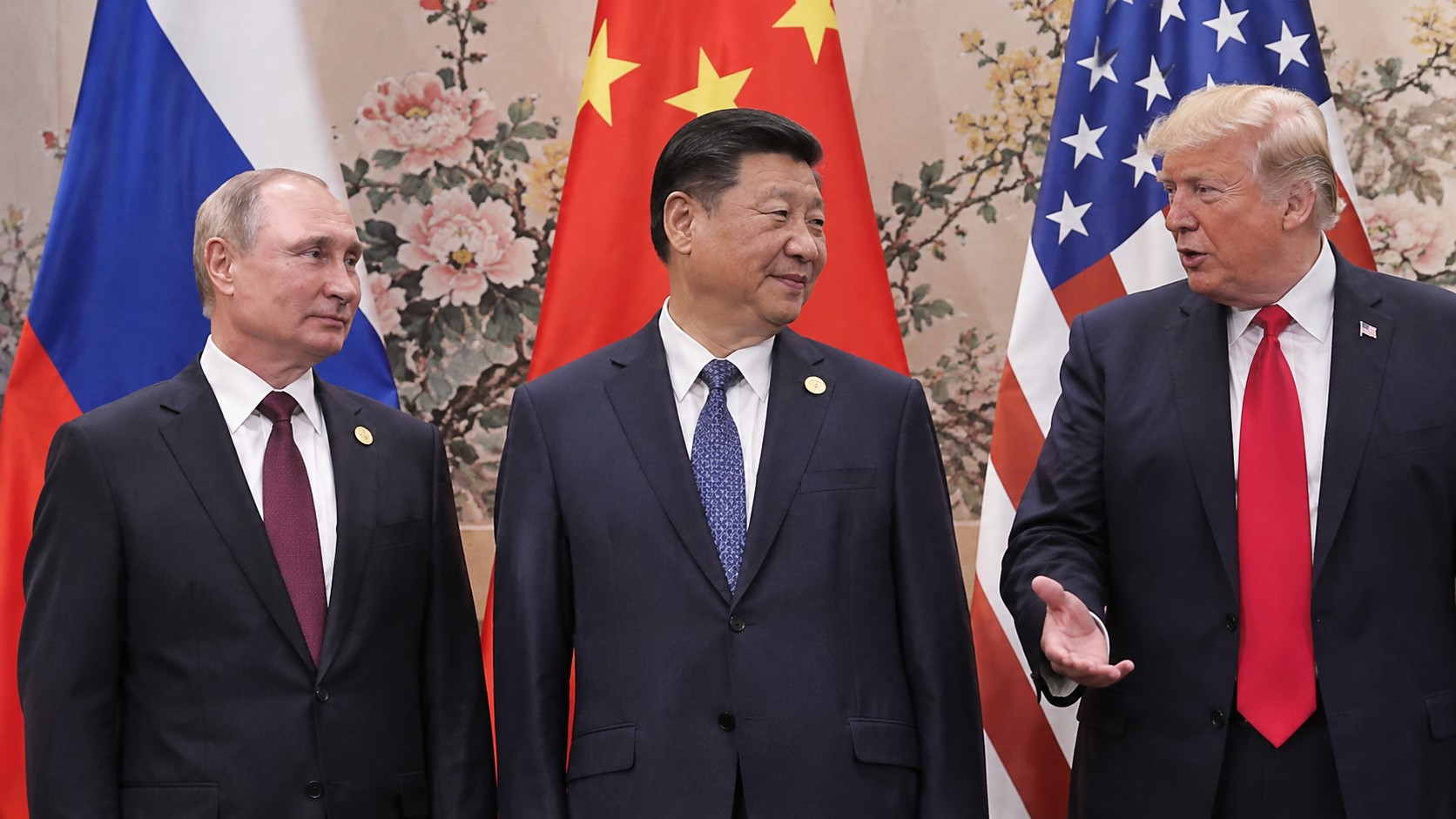
US President Donald Trump has acknowledged the challenges of reaching a nuclear arms control agreement with Russia and China, while reaffirming his determination to pursue negotiations aimed at reducing the world's nuclear arsenals.
US President Donald Trump has described the prospect of reaching a nuclear arms control agreement with Russia and China as extremely difficult, despite expressing continued support for negotiations aimed at limiting nuclear weapons.
Speaking in a telephone interview attributed to Reuters while returning to Washington from a trilateral summit in China, Trump reflected on discussions with Chinese President Xi Jinping and Russian President Vladimir Putin, acknowledging the political and strategic obstacles surrounding nuclear disarmament.
Although the American president expressed enthusiasm for the idea of reducing nuclear arsenals, he admitted that translating the concept into a binding international agreement would present considerable challenges.
Nuclear Arms Control Remains a Diplomatic Challenge
According to the report, initiating trilateral negotiations on nuclear weapons was among Trump's principal objectives during his visit to China.
The proposed discussions would bring together three major nuclear powers at a time when international security concerns and strategic competition continue to shape relations between Washington, Moscow and Beijing.
China has traditionally approached nuclear arms control negotiations with caution, particularly because its nuclear arsenal remains considerably smaller than those of the United States and Russia.
Beijing has also been expanding its nuclear capabilities, a development that complicates efforts to establish a framework acceptable to all three countries.
Trump suggested that President Xi shared his broader interest in limiting nuclear proliferation, while acknowledging the difficulties involved in persuading countries to reduce their strategic arsenals.
He illustrated the challenge by referring to the prospect of a nuclear power possessing thousands of weapons being asked to surrender half of them.
For governments that regard nuclear deterrence as a fundamental component of national security, such decisions involve complex calculations concerning military capabilities, strategic balance and international trust.
Trump Vows to Continue Negotiations
Despite the obstacles, Trump indicated that he would continue raising the issue with his Russian and Chinese counterparts.
The US president described nuclear arms reduction as an important objective, even while recognising the psychological and political difficulties associated with negotiating substantial reductions.
His remarks highlight a central challenge facing international arms control efforts: the need to reconcile the long-term goal of reducing nuclear threats with the immediate security priorities of individual countries.
Any potential trilateral agreement would require extensive negotiations covering verification mechanisms, transparency, the scope of weapons limitations and guarantees intended to preserve strategic stability.
The Future of Global Nuclear Security
The prospect of nuclear arms control negotiations involving Washington, Moscow and Beijing comes amid broader uncertainty surrounding the future of international security arrangements.
The United States and Russia possess the world's largest nuclear arsenals, while China's expanding capabilities have increasingly placed it at the centre of discussions about the future of strategic deterrence.
Bringing all three countries into a common negotiating framework could represent a significant diplomatic development, although major differences remain over the size of their arsenals and the obligations each government would be prepared to accept.
For the international community, renewed dialogue on nuclear arms control would carry implications extending well beyond relations among the three powers.
Progress could contribute to greater strategic predictability and reduce the risks associated with military escalation, while the absence of an agreement would leave existing security concerns unresolved.
Trump's latest remarks underline the distance between the ambition of nuclear disarmament and the realities of international diplomacy. While the American president has pledged to continue pursuing an agreement, the challenge will be finding common ground among three powers whose nuclear capabilities, strategic interests and security priorities differ substantially.