












A New Yalta in Shenzhen? How Putin Emerged as the Strategic Winner of the Trump–Xi Summit
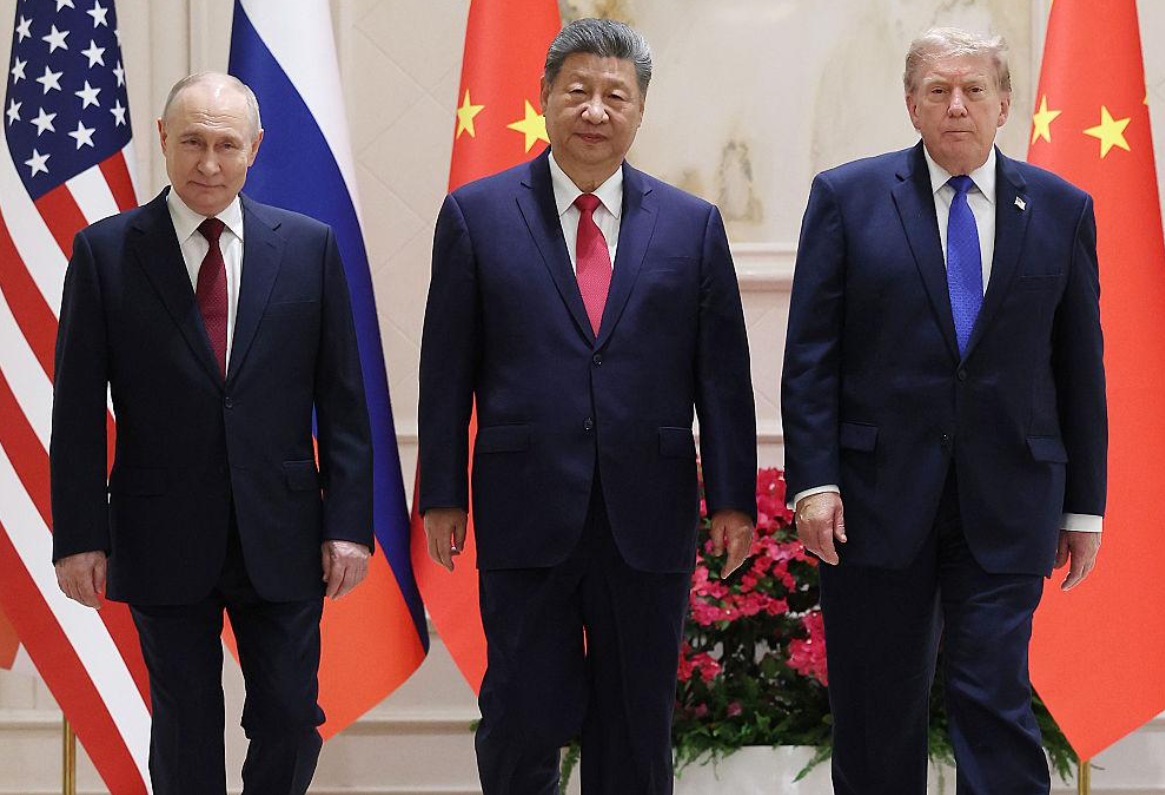
Three world powers, one negotiating table and a declaration of peace that left the most explosive global conflicts unresolved. While Trump celebrated a historic diplomatic spectacle and Xi reinforced China's position at the centre of global diplomacy, Putin may have walked away with the most significant political advantage.
Aviamost News – International News and Analysis
Was the historic Shenzhen summit a diplomatic breakthrough, a carefully choreographed display of global power, or the beginning of a new international order shaped by three men?
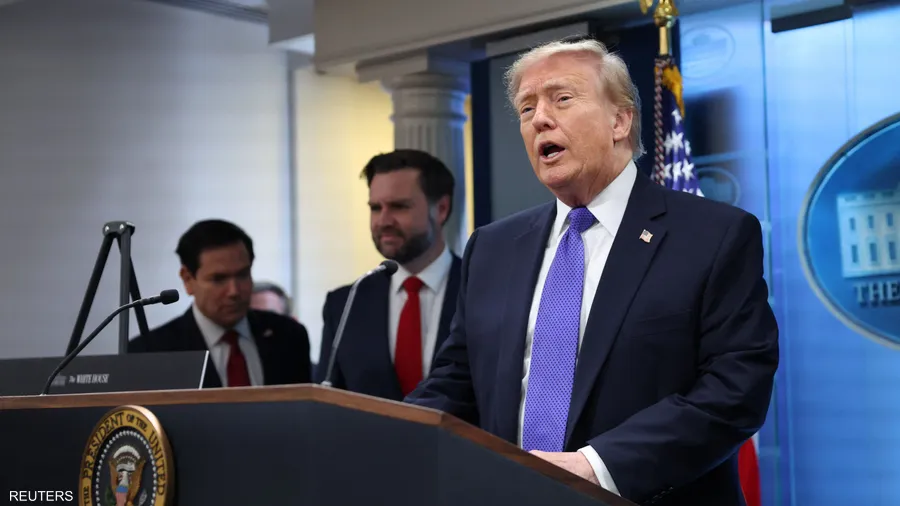
When US President Donald Trump, Chinese President Xi Jinping and Russian President Vladimir Putin gathered in Shenzhen on 19 November, the world witnessed an unprecedented encounter between the leaders of three of its most influential powers.
The symbolism was unmistakable. More than eight decades after the 1945 Yalta Conference, where Franklin D. Roosevelt, Winston Churchill and Joseph Stalin negotiated the postwar order, a new generation of leaders sat together to discuss the future of international security.
Trump himself described the Shenzhen gathering as bigger than Yalta. Yet unlike the historic conference, which became synonymous with great-power bargaining, Shenzhen produced no territorial settlement, no binding nuclear agreement and no breakthrough in the conflicts dominating international diplomacy.
Instead, it produced something potentially more consequential for Moscow: renewed recognition of Putin as an indispensable participant in negotiations over the world's security architecture.
From Diplomatic Protocol to Political Reality
The first signs of the summit's complex political dynamics emerged before the negotiations began.
Xi extended a warm welcome to Trump, reinforcing the importance Beijing attached to its relationship with Washington. Putin, meanwhile, appeared less central to the ceremonial spectacle.
But diplomatic appearances can be misleading.
During a separate encounter ahead of the trilateral meeting, Trump greeted Putin with visible familiarity, referring to the Russian president as his friend.
The two leaders then held a private discussion lasting approximately 40 minutes, with Ukraine emerging as a central subject.
According to the Russian side, Putin left the meeting in excellent spirits.
The significance of those 40 minutes went beyond their duration. For a Russian president facing Western sanctions and an International Criminal Court arrest warrant, direct engagement with Washington on one of Europe's most consequential conflicts represented an important diplomatic opportunity.
It also suggested that despite years of confrontation, the Kremlin remained firmly embedded in the negotiations shaping Europe's future.
Ukraine: The Question That Changed the Political Equation
The war in Ukraine was not explicitly addressed in the final trilateral declaration. Nevertheless, it remained one of the most politically sensitive issues surrounding the summit.
Putin disclosed that his discussion with Trump had focused substantially on Ukraine and that the conversation had taken place at the American president's initiative.
This distinction matters.
For Moscow, Washington's willingness to initiate direct discussions offers an opportunity to reinforce its argument that any durable settlement must account for Russia's security concerns.
For Ukraine and its European allies, however, such engagement raises a different question: can negotiations involving the world's major powers produce a sustainable peace without undermining Ukrainian sovereignty?
Trump expressed optimism about the possibility of ending the conflict, while the Kremlin continued to signal its willingness to participate in diplomatic discussions.
Yet the most difficult issues, particularly territorial control and security guarantees, remain unresolved.
No evidence emerged from Shenzhen of an agreement granting Russia territorial concessions or committing Washington to accept Moscow's demands.
Nevertheless, Putin obtained something politically valuable: an opportunity to speak directly with the American president about Ukraine before joining him and Xi at a summit presenting Russia as one of the three principal architects of global security.
For the Kremlin, that recognition alone constituted a significant diplomatic achievement.
The International Criminal Court: Putin's Most Significant Diplomatic Gain?
Perhaps the most revealing outcome of Shenzhen concerned an institution that has become a major source of confrontation between Russia and the West: the International Criminal Court (ICC).
In March 2023, the court issued an arrest warrant for Putin over allegations involving the unlawful deportation and transfer of Ukrainian children. Russia rejects the accusations and does not recognise the court's jurisdiction.
At Shenzhen, Trump openly criticised the ICC, arguing that it had exceeded its authority.
The final declaration subsequently endorsed respect for the immunities of state officials and warned against abuses of jurisdiction by international judicial institutions.
For Putin, the political implications were significant.
The American president had publicly aligned himself with language questioning the reach of an institution seeking the Russian leader's arrest.
Crucially, the declaration does not cancel the ICC's warrant, alter its legal obligations or provide Putin with legal immunity from arrest.
But politically, it allows Moscow to portray its criticism of the court as a position now shared by Washington and Beijing.
In this respect, Putin may have secured his clearest strategic advantage from the summit: not legal protection, but an important diplomatic endorsement of his longstanding challenge to international judicial authority.
Xi Jinping and the Taiwan Question: China's Diplomatic Calculation
If Putin sought diplomatic rehabilitation, Xi Jinping came to Shenzhen determined to reinforce China's strategic red lines.
Taiwan remained at the centre of Beijing's calculations.
During bilateral discussions, Xi urged Washington to adopt what he described as the correct approach to Taiwan, warning that disagreements over the island could undermine US-China relations.
According to China's official account, Trump reiterated that the United States does not support Taiwanese independence.
However, this wording reflects a longstanding American position and should not automatically be interpreted as a new concession or a withdrawal of US security commitments. The American account did not publicly confirm the statement in the same terms.
Xi's broader diplomatic message was equally important: major powers must respect sovereignty, territorial integrity and one another's core interests.
For Beijing, hosting the summit represented a demonstration that China's growing economic influence has evolved into global diplomatic authority.
Xi succeeded in bringing Washington and Moscow to the same table, placing China at the centre of a discussion about the international order.
Yet Taiwan was absent from the final declaration, underlining the limits of what Beijing secured in writing.
Iran and the Strait of Hormuz: The Energy Equation
While Ukraine dominated the European security dimension of the summit, Iran and the Strait of Hormuz illustrated the competing interests of all three powers in the Middle East.
Trump reiterated that Washington would not allow Iran to acquire nuclear weapons. At the same time, he indicated that the United States and China shared an interest in restoring reliable access through the Strait of Hormuz.
The strategic importance of this waterway is difficult to overstate.
For China, energy security is essential to its industrial economy. Russia has its own interests as a major global petroleum exporter, while the United States views developments around Iran through the lenses of regional security, military strategy and international energy markets.
Despite these competing priorities, the leaders found common ground on the importance of stable energy flows.
Their declaration called for increased production and supply of refined petroleum products and reaffirmed the importance of energy stability.
Yet Iran was conspicuously absent from the document.
The omission reflected the distance between broad agreement on energy security and the far more difficult task of resolving regional conflicts.
There was no confirmed three-way agreement trading concessions over Iran, Ukraine or Taiwan. Nevertheless, the summit demonstrated how energy security can create limited cooperation even among powers divided by major geopolitical disputes.
Nuclear Weapons: Trump's Ambition Meets Strategic Reality
For Trump, one of the summit's most ambitious objectives was to initiate a new era of nuclear arms control.
The expiration of the New START treaty in February 2026 removed the last bilateral treaty limiting the world's two largest nuclear arsenals, those of Russia and the United States.
Trump has repeatedly argued that any future disarmament framework should include China.
Beijing, however, maintains that its nuclear arsenal remains substantially smaller than those of Washington and Moscow, making immediate participation in an equivalent arms-reduction agreement unacceptable.
At Shenzhen, Xi warned of the dangers posed by nuclear weapons and called for their eventual elimination.
The three leaders reaffirmed a principle that has long formed part of nuclear diplomacy:
A nuclear war cannot be won and must never be fought.
They also agreed to maintain dialogue aimed at reducing nuclear risks and preventing proliferation.
But there was no new treaty, no inspection mechanism, no agreed reductions and no binding timetable.
Trump secured recognition of the need for dialogue, but not the comprehensive three-way agreement he had sought.
The outcome reinforced the distance between diplomatic ambition and strategic reality.
The Declaration of Peace: Four Points and Three Major Omissions
After approximately 80 minutes of trilateral discussions, the leaders issued a four-point declaration addressing United Nations reform, stable energy supplies, the jurisdiction of international courts and nuclear risk reduction.
What the document did not contain was perhaps as revealing as what it included.
There was no reference to Ukraine, no settlement concerning Taiwan and no specific agreement on Iran.
Nor did the declaration establish a binding mechanism for resolving these disputes.
The meeting therefore produced a diplomatic framework rather than a comprehensive peace agreement.
For Trump, it represented a historic image of American engagement with rival powers.
For Xi, it reinforced Beijing's emergence as an international diplomatic centre.
For Putin, it offered a platform from which Russia could reassert its status as a major power whose participation remains essential to discussions about international security.
A New Yalta — or a New Balance of Power?
In February 1945, Roosevelt, Churchill and Stalin gathered in Yalta as the Second World War approached its conclusion.
Their negotiations helped shape the political landscape of postwar Europe and became an enduring symbol of diplomacy conducted by great powers.
Shenzhen was fundamentally different.
No territorial boundaries were redrawn. No peace settlement was imposed. No binding nuclear disarmament agreement emerged.
Yet the resemblance lies in the underlying question: are the world's most powerful countries attempting to establish new understandings about their respective spheres of influence?
For European governments, Ukraine and Taiwan, such diplomacy raises concerns about decisions being discussed without the direct participation of those most affected.
For Washington, direct dialogue offers a potential route to reducing confrontation.
For Beijing, the summit demonstrated the importance of China in any future international security framework.
For Moscow, the diplomatic benefits may be more immediate.
Putin entered Shenzhen as a leader facing international isolation from Western governments, sanctions and an ICC arrest warrant.
He left having participated in unprecedented talks with the leaders of China and the United States, secured direct discussions with Trump on Ukraine and signed a declaration challenging perceived abuses of international judicial jurisdiction.
Those achievements do not amount to victory in Ukraine. Nor do they guarantee a favourable peace settlement or remove Russia's economic and diplomatic challenges.
But they mark a significant opportunity for Moscow to challenge attempts to exclude it from major international negotiations.
The central paradox of Shenzhen is that the leader who appeared least prominent in the opening ceremony may have emerged with the greatest immediate political advantage.
Trump obtained the images of an extraordinary summit. Xi demonstrated China's power to convene the world's leading geopolitical rivals. Putin gained international visibility, direct access to Washington and language in a joint declaration that aligned with key Russian diplomatic objectives.
Whether those gains translate into lasting strategic advantages remains uncertain.
One conclusion, however, is difficult to ignore.
Shenzhen may not have divided the world as Yalta once symbolised. But it showed that the future of the international order is increasingly being negotiated through direct bargaining among its most powerful states.
And among the three leaders who gathered around the table, Vladimir Putin may have had the strongest reasons to leave satisfied.