


















Huawei and US Tariff Threats Test Fragile Washington–Beijing Relations Amid Growing Technology Rivalry
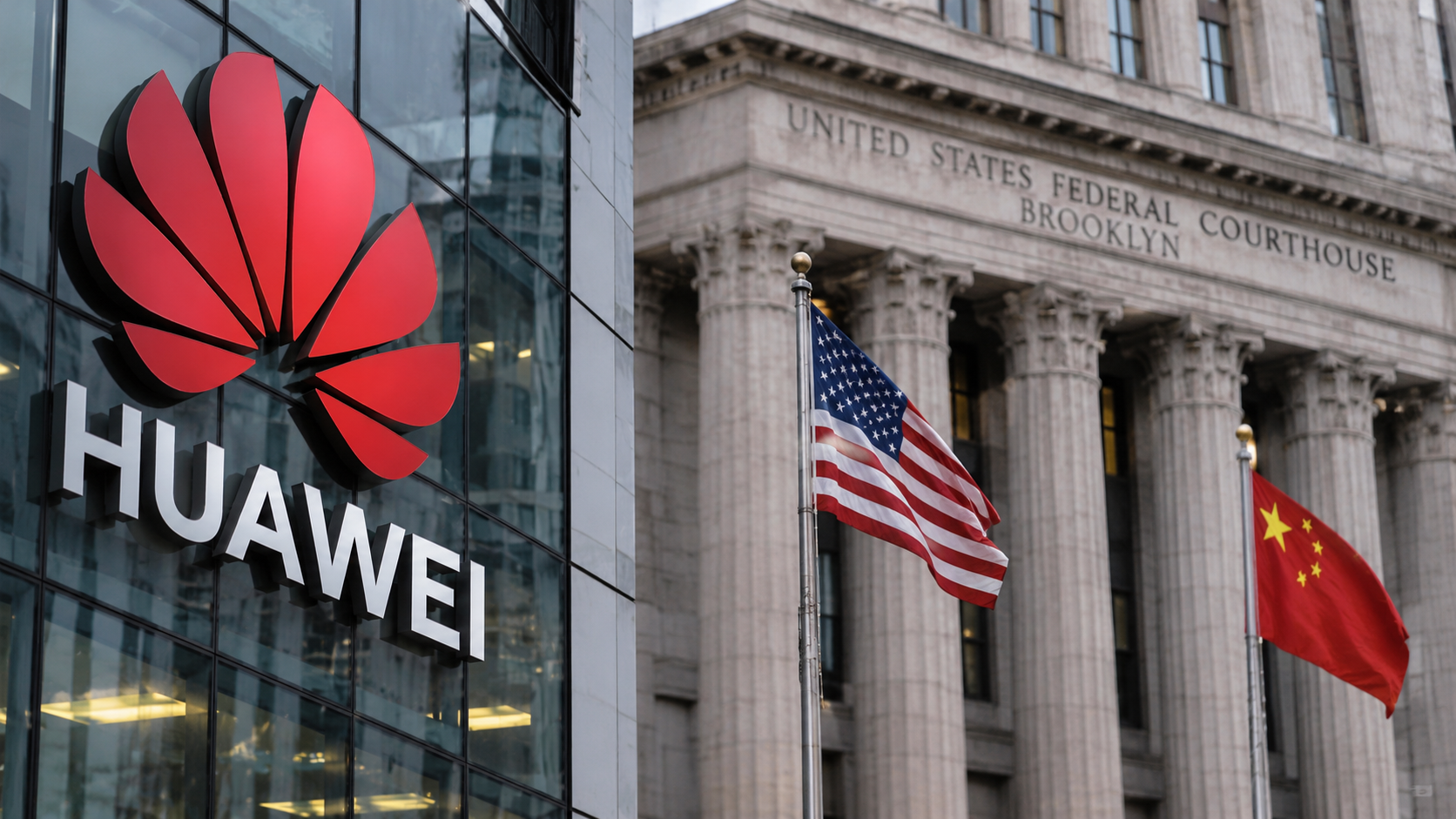
Renewed US tariff threats against Chinese imports and a court verdict involving telecommunications giant Huawei have brought fresh tensions to relations between Washington and Beijing, just one week after both sides described their diplomatic engagement in highly positive terms. As technology and artificial intelligence become increasingly central to national security, economic competition, judicial independence and geopolitical interests are testing the limits of the recent rapprochement.
Relations between the United States and China are facing renewed uncertainty as Washington's threats to introduce additional tariffs on Chinese imports coincide with a US court verdict involving telecommunications giant Huawei.
The developments have revived tensions between the world's two largest economies, despite the optimistic atmosphere surrounding their recent high-level diplomatic engagement, which both sides described in highly positive terms just one week earlier.
The latest developments highlight the challenges facing Washington and Beijing as they attempt to maintain diplomatic dialogue while navigating increasingly complex disagreements over technology, trade, national security and international sanctions.
At the centre of these tensions lies a fundamental question: whether economic cooperation and diplomatic engagement can withstand the growing strategic competition between the two global powers.
Huawei Case Raises Questions Over Technology and National Security
Technology has become an increasingly important component of US national security policy, particularly as competition intensifies in advanced telecommunications, semiconductors and artificial intelligence.
The Huawei case has brought renewed attention to the legal and regulatory challenges facing Chinese technology companies operating internationally.
According to the reported proceedings, the criminal case involved allegations that Huawei recruited employees working at American telecommunications companies to obtain sensitive technological information.
The case also included accusations that the company provided misleading information concerning its business activities in Iran.
The investigation reportedly began more than a year before the verdict, while the trial continued for approximately three months.
This timeline suggests that the legal proceedings were already underway before the latest escalation in trade tensions between Washington and Beijing.
Nevertheless, the coincidence of the court verdict with renewed American tariff threats has intensified political scrutiny and raised questions about the broader implications for bilateral relations.
The case illustrates how legal disputes involving major technology companies can acquire wider diplomatic significance when they unfold against a backdrop of strategic competition.
Judicial Independence and the Limits of Presidential Authority
The Huawei case has also renewed debate over the relationship between judicial proceedings and political decision-making in the United States.
The American constitutional system is based on the separation of powers between the legislative, executive and judicial branches of government.
Under this framework, the executive branch can introduce foreign policy measures, impose economic sanctions, implement tariffs and issue executive orders within its legal authority.
Judicial decisions, however, are made through a separate legal process.
Although the US Attorney General serves within the executive branch, that position does not confer authority to direct judges' rulings.
This distinction is important when assessing the relationship between Washington's trade policies towards China and legal proceedings involving individual companies.
While political decisions and court verdicts may have overlapping diplomatic consequences, their legal foundations and institutional processes remain distinct.
At the same time, Beijing's concerns about the political implications of American legal actions demonstrate the continuing differences between the two countries over the interpretation of national security and international economic regulation.
Iran Adds Another Layer of Complexity to US–China Relations
Iran has emerged as another significant factor complicating relations between Washington and Beijing.
The United States maintains sanctions affecting commercial and financial dealings with Tehran, making compliance an important consideration for international companies seeking access to American markets and financial systems.
Under President Donald Trump's administration, Iran remains a major foreign policy priority.
Companies conducting business with Iranian entities may face legal and regulatory consequences depending on the nature of their activities and the applicable sanctions.
Commercial relationships with Iran do not automatically exempt companies from restrictions involving the US market, American-origin technologies or transactions conducted through the US financial system.
The Huawei case therefore highlights the complex intersection between international business operations, sanctions compliance and national security considerations.
However, the existence of commercial links with Iran does not, by itself, establish that judicial proceedings involving a company are politically motivated.
More broadly, the Iranian dimension demonstrates the difficulty of separating US–China economic relations from international disputes in which Washington and Beijing maintain differing strategic interests.
Artificial Intelligence and Technology Narrow the Scope for Cooperation
Technological competition has become one of the defining features of contemporary relations between the United States and China.
Artificial intelligence, advanced telecommunications and other strategically important technologies are increasingly viewed not only as engines of economic growth but also as essential components of national security.
This transformation has introduced new challenges into an already sensitive bilateral relationship.
While the Huawei case concerns specific legal allegations and regulatory obligations, the broader competition in artificial intelligence involves questions of technological leadership, research capabilities, investment and strategic influence.
These issues are interconnected through the wider technology sector, but they should not automatically be treated as elements of a single political dispute.
The recent US–China summit demonstrated the continuing importance of diplomatic engagement between the two countries.
However, positive diplomatic language does not necessarily indicate that substantive disagreements have been resolved.
Although the discussions covered several important areas, the extent to which they produced concrete commitments capable of reducing tensions remains uncertain.
The renewed tariff threats and developments surrounding Huawei underscore the limitations of diplomatic goodwill when fundamental differences over economic and security priorities remain unresolved.
Beijing Navigates Washington's Multiple Foreign Policy Challenges
The broader international environment is also influencing the relationship between the United States and China.
Washington continues to address several major foreign policy challenges, including developments involving Iran and the conflict in Ukraine.
These issues require diplomatic attention and strategic resources while the United States simultaneously manages its economic and technological competition with Beijing.
China, meanwhile, maintains an approach that seeks to preserve diplomatic flexibility across multiple international relationships.
In its dealings with Iran, Beijing has sought to balance economic and strategic interests with the wider implications of regional tensions and international sanctions.
This positioning allows China to maintain relationships with different international partners while avoiding complete alignment with every aspect of their respective policies.
At the same time, the United States continues to exercise considerable economic and financial influence internationally.
The interaction between these competing interests contributes to an increasingly complex diplomatic environment in which bilateral trade relations cannot be viewed independently of broader geopolitical developments.
Trade, Technology and National Security Shape the Future of Bilateral Relations
The latest tensions surrounding Huawei and US tariff threats reflect the growing difficulty of balancing economic interdependence with strategic competition.
Despite their differences, the United States and China remain deeply connected through international trade, manufacturing, technology supply chains and global financial markets.
However, disputes over tariffs, advanced technologies, sanctions compliance and national security are creating additional obstacles to closer cooperation.
For multinational technology companies, the evolving regulatory environment highlights the importance of navigating different legal systems and increasingly complex international trade restrictions.
For policymakers, the challenge lies in protecting national security interests while managing the economic consequences of restrictions affecting strategically important industries.
As artificial intelligence and other advanced technologies become more closely associated with national security, the scope for compromise in sensitive sectors may become increasingly limited.
The simultaneous pressures of geopolitical disputes, economic competition and potential new trade restrictions are likely to remain central to discussions between Washington and Beijing.
A Delicate Balance Between Diplomacy and Strategic Competition
The latest developments demonstrate that improving diplomatic relations does not necessarily eliminate longstanding differences between major economic powers.
While Washington and Beijing continue to engage in dialogue, the Huawei case and renewed tariff threats reveal how quickly tensions can resurface when legal, commercial and security interests intersect.
The growing importance of artificial intelligence and advanced technology adds another dimension to this relationship, making technological leadership an increasingly significant consideration in international economic policy.
The durability of the recent diplomatic rapprochement will depend on the ability of both countries to manage disagreements while maintaining channels of communication and economic engagement.
As the United States and China navigate an increasingly competitive global environment, the renewed tensions surrounding Huawei and trade restrictions underscore one of the defining challenges of international relations: balancing technological innovation and economic cooperation with national security priorities and competing geopolitical interests.
Editorial adaptation based on the supplied Sky News Arabia report. The article presents a general analysis without attributing individual interpretations to the interviewee. The reported court verdict and specific allegations have not been independently verified.