




















US-Iran standoff: 5 things UAE residents need to know today
Back To Main Page: Economy and Business, UAE News
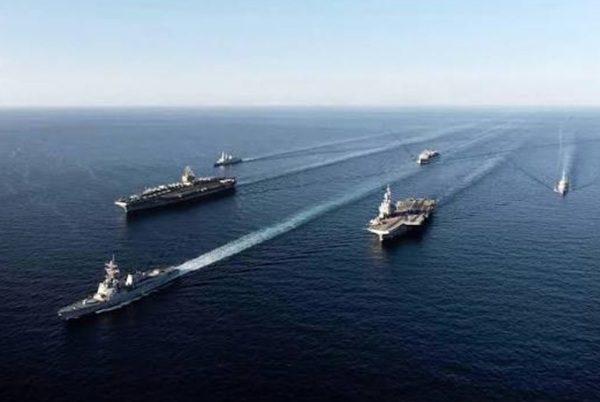
The Strait of Hormuz remains the biggest concern for the Gulf, while Washington prepares new sanctions and Iran warns neighbouring countries against joining the US economic campaign. Here is what UAE residents need to know on Monday, August 24.
The US-Iran conflict has entered a new and increasingly uncertain phase.
Military exchanges have eased, but there is no peace deal and no clear diplomatic breakthrough. Instead, the confrontation is shifting towards economic pressure, shipping restrictions and the battle over the Strait of Hormuz – a combination that could have consequences far beyond Iran.
For people living in the UAE, the key question is no longer simply whether fighting will resume. It is whether the conflict will continue to disrupt the Gulf's energy, shipping and aviation networks.
Here are five things to watch today.
- Some Iraqi tankers are moving through Hormuz but this is not a reopening
Iran has granted special permission for a number of Iraqi oil tankers to pass through the Strait of Hormuz after repeated requests from Baghdad, Iranian state media reported on Saturday.
The move is significant because Iraq has been among the countries hit hardest by the effective shutdown of the waterway. Baghdad has been seeking ways to keep its oil exports moving and is also working to expand alternative routes through Turkey, Syria and Jordan.
But residents should not interpret the move as a return to normal shipping.
Traffic through Hormuz remains dramatically below pre-war levels, while vessels continue to face security risks in and around the strait. Reuters reported that the waterway's disruption has already constrained oil shipments and contributed to volatility in global energy markets.
For the UAE, this is particularly important. Hormuz lies immediately off the country's coast and is one of the world's most important energy corridors. A prolonged reduction in shipping can feed through to oil prices, freight costs, insurance, supply chains and regional trade.
In other words, a handful of permitted tankers is a sign of selective movement not a restoration of normal traffic.
- Iran is warning Gulf neighbours not to join the US economic campaign
Iran's new Secretary of the Supreme National Security Council, Mohsen Rezaei, has issued a direct warning to neighbouring countries.
He said countries that participate in the US economic campaign against Tehran could themselves face retaliation, including threats to their economic interests. Iranian officials have also warned that Tehran could target alternative oil-export routes if regional states participate in what Iran considers economic aggression.
That raises the stakes for the Gulf.
The UAE and other regional economies are deeply integrated into global trade and financial networks, meaning that the conflict's economic dimension could create pressure even without a new wave of direct military strikes.
For UAE residents, the important distinction is this: the immediate risk is not necessarily that the UAE is entering the war, but that the economic and security consequences of the conflict could spread across the region.
- Washington is moving from military pressure to economic pressure
The US is preparing a major new sanctions campaign against Iran.
US Treasury Secretary Scott Bessent has described the planned measures as the “toughest sanctions in history”, while President Donald Trump has called the campaign an unprecedented economic offensive aimed at isolating Tehran and putting pressure on countries that continue trading with Iran.
Iran has rejected the threatened measures as illegal and ineffective. Foreign Minister Abbas Araghchi has described the planned sanctions as a sign of US desperation, while President Masoud Pezeshkian has continued to argue for a diplomatic solution.
The significance goes beyond Iran.
If Washington expands sanctions to companies, banks, shipping firms or countries that facilitate Iranian trade, the effects could spread through energy markets, shipping, insurance and international finance.
That is why the next US announcement matters for businesses in the Gulf even if they have no direct dealings with Iran.
- Diplomacy is still alive but there is no breakthrough
The diplomatic track has not disappeared, although it remains fragile.
Egypt has been working to revive US-Iran talks and has been in contact with Iranian officials. At the same time, Pakistan has stepped up its mediation efforts, with Pakistani army chief Asim Munir travelling to Tehran as part of an attempt to promote a diplomatic solution. Oman is also involved in efforts to address the wider dispute over the Strait of Hormuz.
Pezeshkian has repeatedly said that Iran wants the conflict resolved through diplomacy, but Tehran's position remains far apart from Washington's on sanctions, the war and the future of the strait.
So while talks and mediation are important, there is currently no confirmed breakthrough or peace agreement.
For Gulf residents, that distinction matters. A genuine return to negotiations could quickly reduce the risk premium surrounding shipping and energy markets. A collapse in mediation, by contrast, could bring another escalation.
- What does this mean for everyday life in the UAE?
For most residents, there is no reason to change normal daily routines simply because tensions remain high. But there are several practical things worth watching.
Flights can change at short notice
UAE airlines continue to operate, but schedules across the region remain fluid. Emirates, Etihad, flydubai and Air Arabia are operating a mixture of normal services, reduced schedules, delays and cancellations on some regional routes. Passengers have been advised to check their individual flight status before leaving for the airport.
That is particularly relevant for anyone travelling to or through Bahrain, Kuwait, Saudi Arabia or other Gulf destinations.
If you have a flight today, check the status of the specific flight — not just the route — before setting out.
Shipping and prices are the bigger economic concern
For residents who are not travelling, the Strait of Hormuz may seem distant. Economically, it is not.
The longer shipping remains disrupted, the greater the potential impact on energy prices, transport costs, insurance, imports and regional business activity. Oil prices have already been volatile as markets assess the impact of reduced flows through Hormuz.
The UAE's diversified economy and extensive infrastructure provide some protection, but no Gulf economy is completely insulated from a prolonged disruption to one of the world's most important maritime corridors.
The three questions to watch today
The next phase of the conflict could hinge on three developments.
First: will shipping through the Strait of Hormuz begin to recover, or will restrictions become more entrenched?
Second: how far will Washington go with its new sanctions, and how will Tehran respond?
Third: can Egypt, Pakistan, Oman and other mediators reopen a credible US-Iran diplomatic channel?
For UAE residents, these questions are more important than any single statement from either side.
The immediate picture is relatively clear: Hormuz is not back to normal, sanctions pressure is increasing and diplomacy has yet to produce a breakthrough.
That leaves the Gulf in a fragile holding pattern in which a diplomatic breakthrough could rapidly ease economic pressure, but another escalation could send shipping, oil and aviation disruptions in the opposite direction.