





















Global Chip War: US Restrictions on China Spark Growing Tensions with European Allies
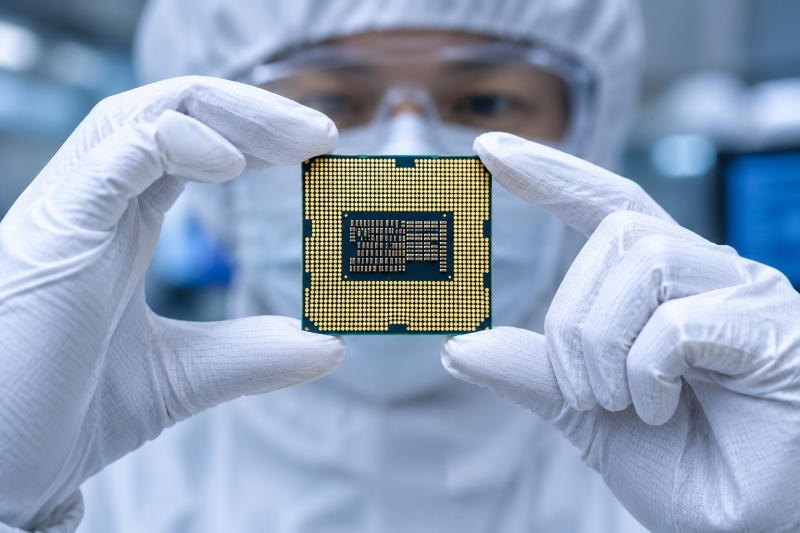
The intensifying global competition over semiconductor technology is creating new tensions between the United States and its European allies, as Washington seeks to tighten restrictions on China's access to advanced chipmaking equipment.
While the United States views semiconductor technology as a strategic priority in its economic and technological competition with Beijing, European governments are increasingly concerned that additional American restrictions could damage their own technology industries without necessarily achieving the intended objective of slowing China's progress.
The latest disagreement centres on the Netherlands, home to ASML, one of the world's most important manufacturers of semiconductor production equipment.
The Dutch government's opposition to a proposed US legislative measure highlights a growing challenge for transatlantic relations: how to balance shared security concerns with Europe's commercial interests and its ability to make independent economic decisions.
Netherlands Challenges Proposed US Semiconductor Restrictions
The Dutch government announced on Thursday that it intends to oppose proposed US legislation seeking to introduce additional restrictions on exports of semiconductor manufacturing equipment to China.
The proposed measures have raised concerns in the Netherlands because of their potential implications for ASML, a Dutch company that occupies a strategically important position in the global semiconductor supply chain.
Dutch Foreign Trade Minister Sjoerd Sjoerdsma told parliament that the Netherlands opposes the extraterritorial application of American legislation — a principle under which US restrictions could affect companies and commercial activities beyond American territory.
The minister indicated that the Dutch government is coordinating with the European Commission, Germany and France in an effort to prevent the proposed legislation from being adopted.
The Dutch position signals that the debate is no longer limited to individual export licences or the commercial interests of a single company.
Instead, it is developing into a broader discussion about the limits of American regulatory influence over European technology businesses and the extent to which European governments can independently determine their economic and industrial policies.
ASML at the Centre of the Global Semiconductor Debate
The significance of the dispute is closely linked to ASML's position within the semiconductor industry.
The Dutch company manufactures highly sophisticated equipment used in chip production, making it an important participant in the international technology supply chain.
As semiconductor manufacturing becomes increasingly central to artificial intelligence, advanced computing and industrial innovation, access to specialised production equipment has acquired growing economic and strategic importance.
For Washington, restrictions on the export of advanced semiconductor technologies are part of a wider effort to limit China's ability to develop capabilities considered strategically sensitive.
For the Netherlands and its European partners, however, the potential consequences extend beyond geopolitical competition.
Additional restrictions could affect European companies' access to international markets, their commercial relationships and their ability to compete in an industry characterised by substantial investment and rapid technological development.
The dispute therefore illustrates the difficulty of coordinating technology policy among allies whose strategic priorities may overlap but whose economic interests are not always identical.
European Economic Sovereignty Comes into Focus
The Dutch government's objections bring the question of European economic sovereignty into sharper focus.
At the heart of the disagreement is whether legislation introduced in Washington should be able to determine the commercial activities of European companies operating under their own national and European regulatory frameworks.
The Netherlands' coordination with the European Commission, Germany and France suggests that the issue could develop into a wider European policy debate rather than remain a bilateral disagreement between Washington and The Hague.
For European governments, the challenge is to maintain cooperation with the United States on technology and security while protecting the competitiveness of their domestic industries.
The debate also reflects a broader tension within international economic relations: national security measures adopted by one country can have consequences for businesses and supply chains located far beyond its borders.
As advanced technologies become more closely connected to strategic competition, questions of regulatory authority, industrial independence and international trade are becoming increasingly difficult to separate.
Washington's China Strategy Faces a Transatlantic Test
US efforts to restrict China's access to semiconductor manufacturing technology form part of the wider technological competition between the world's two largest economies.
Semiconductors are essential components in a broad range of products and systems, making the industry a significant area of economic and strategic competition.
However, the latest Dutch response demonstrates that maintaining a coordinated approach among Western partners may become more challenging when proposed restrictions directly affect European businesses.
Although Washington and European capitals share important strategic interests, they may differ over the scope of export controls, the economic costs of restrictions and the authority of national legislation beyond domestic borders.
The Netherlands' opposition does not necessarily indicate a fundamental breakdown in transatlantic cooperation. It does, however, reveal an important disagreement over how far restrictions should extend and who should determine their application.
The outcome of the legislative debate could therefore have implications for future cooperation on semiconductor export controls and other strategically important technologies.
Could the Chip War Become a US–Europe Trade Dispute?
The semiconductor industry has emerged as one of the defining arenas of international technological competition.
What began primarily as a dispute over China's access to advanced technologies is increasingly raising difficult questions among the United States and its own partners.
For Europe, the central concern is whether measures designed to constrain China's technological development could also weaken European companies operating in the same global market.
For the United States, the challenge is to pursue its strategic objectives while maintaining the cooperation of allies whose businesses play important roles in international semiconductor production.
The Dutch government's stated intention to oppose the proposed legislation highlights the possibility that disagreements over export restrictions could become a more significant issue in US–European economic relations.
Whether these differences can be resolved through coordination and negotiation will depend on the development of the American legislative proposal and the positions ultimately adopted by European governments.
Technology, Trade and National Security Shape a New Global Balance
The latest semiconductor dispute demonstrates how closely technology policy has become connected to economic sovereignty and international diplomacy.
The Netherlands' defence of its regulatory independence, together with its coordination with major European partners, reflects the complexity of balancing national industrial interests with broader strategic cooperation.
For the global semiconductor industry, the debate also underscores the uncertainty created when international supply chains become subject to competing national priorities.
As the United States continues its efforts to limit China's access to advanced chipmaking technologies, resistance from European allies could become an increasingly important factor in shaping future export policies.
The central question is no longer simply how far Washington can restrict China's semiconductor ambitions, but whether it can do so without creating deeper divisions with the European partners whose technology industries remain essential to the global chip supply chain.