



















UAE to establish unified health emergency command system within two years
Back To Main Page: UAE News
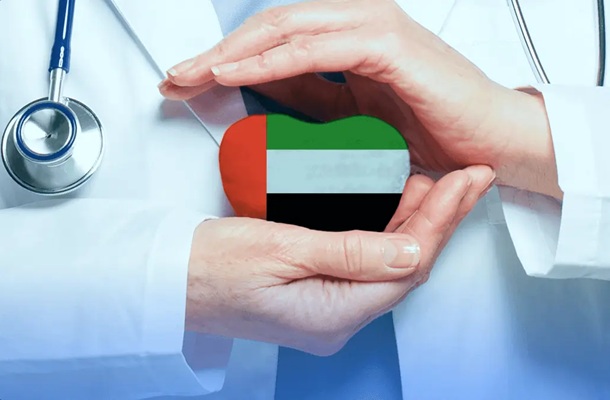
The planned UAE-wide system would seek to bring emergency health capabilities together under a more unified structure
The UAE plans to establish a unified command-and-control system for the health emergency sector within two years, as the country moves to strengthen healthcare resilience and integrate emergency services.
Health and Prevention Minister Ahmed bin Ali Al Sayegh announced the plan at the opening of the Future Health Summit in Abu Dhabi on Tuesday.
He pointed to Abu Dhabi's unified ambulance services and integrated patient-journey systems as examples of infrastructure that could be expanded across the country.
The minister said recent regional instability had tested the resilience of the UAE's healthcare system, including hospitals and intensive-care capacity, and demonstrated the need for integrated emergency systems and a trained workforce.
The planned UAE-wide command system would seek to bring emergency health capabilities together under a more unified structure.
Al Sayegh also outlined a wider national rethink of healthcare under an approach he called 'Healthy UAE'.
He said President Sheikh Mohamed bin Zayed had called for a system that links the UAE's health systems and makes them more effective, with the response centred on preventing illness rather than waiting for people to become sick.
“It's beyond healthcare,” Al Sayegh said, describing Healthy UAE as being rooted in a national public health and wellbeing strategy intended to bring health and non-health sectors together.
The approach builds on work already under way to develop the UAE National Public Health Strategy 2026–2031, which is focused on prevention, health promotion, resilience and population wellbeing.
Abu Dhabi has already been pursuing a prevention-led model through its Healthy Living agenda, spanning areas including physical activity, nutrition, schools, workplaces and the wider food environment.
The national Healthy UAE approach would broaden that philosophy across the UAE, with sectors outside healthcare playing a greater role in determining health outcomes.
UAE digital-health cooperation in the region
The summit also highlighted the UAE's role in supporting health-system digitalisation elsewhere in the region. Dr Ibrahim Labib, who is leading digital transformation in Jordan's health sector, described cooperation with the UAE on a digital health centre connecting remote and rural hospitals.
Labib said 12 hospitals had been connected, enabling tele-ICU, telemedicine and tele-dialysis services. Radiology reporting times had fallen from several days to around two hours, while tens of thousands of dialysis sessions had been remotely monitored.
Greece's Health Minister Adonis Georgiadis also pointed to the UAE as a model for digital health, saying Greece had accelerated its own digital transformation after seeing developments in the UAE.
Georgiadis said Greece now has digital health records available through its MyHealth application and has screened millions of people for a range of diseases.
The UAE's emerging health-system model therefore combines digital health, AI, prevention, emergency resilience and cross-government public-health policy.