



















Abu Dhabi Talks Signal a Wider Diplomatic Push Towards Ukraine Peace and Europe’s Security Future
Prepared and edited by AVIAMOST – International Media Monitoring
ABU DHABI, November 11, 2026 – Abu Dhabi has emerged as a focal point of international diplomacy as Russia, Ukraine and the United States continue a new round of trilateral negotiations aimed at finding a political solution to the war in Ukraine. Beyond efforts to secure a ceasefire, the discussions are opening a broader debate over Europe's future security architecture, relations between Moscow and the West, and the strategic arrangements that could shape the continent in the years ahead.
The latest round of talks brings together American, Russian and Ukrainian delegations, with senior UAE officials supporting the diplomatic process. The negotiations come after approximately nine months without direct talks and amid renewed efforts by US President Donald Trump's administration to bring the parties back to the negotiating table.
While an immediate end to hostilities remains a central objective, the agenda increasingly reflects the complexity of a conflict whose consequences extend far beyond Ukraine's borders.
European Security Takes Centre Stage
One of the most significant developments in the Abu Dhabi negotiations is the expansion of discussions beyond territorial questions and ceasefire arrangements to include the future of European security.
Moscow maintains that a lasting settlement must address what it considers its fundamental security concerns, including NATO's future role, the alliance's military expansion and the presence of Western military infrastructure near Russian borders.
According to Reuters, citing a source within the Russian delegation, Moscow views the establishment of a comprehensive European security framework as an important component of the negotiations. From the Russian perspective, resolving the conflict in Ukraine should form part of a broader understanding of collective security across the continent.
Russian Foreign Minister Sergei Lavrov has welcomed discussions on a future European security architecture, suggesting that the current US administration is approaching the issue differently from its predecessor.
Ukraine, however, maintains that any future security arrangements must respect its sovereignty, territorial integrity and right to determine its own political and security priorities.
These contrasting positions illustrate one of the central challenges facing negotiators: reconciling Russia's demands for a revised regional security framework with Ukraine's insistence on credible guarantees of its independence.
Moscow Seeks Broader Strategic Understanding
The composition of the Russian delegation reflects the importance Moscow attaches to the negotiations and the range of issues under consideration.
The delegation is led by Russian presidential aide Vladimir Medinsky and includes Deputy Foreign Ministers Sergei Ryabkov and Mikhail Galuzin, alongside senior military and intelligence officials, including Igor Kostyukov.
Their participation suggests that Moscow regards the Abu Dhabi meetings as an opportunity to address interconnected political, military and strategic questions rather than focusing exclusively on the technical details of a ceasefire.
A central element of Russia's position concerns the future relationship between Moscow and Western governments, particularly the security arrangements that could prevent renewed confrontation.
For Kyiv, however, the starting point of any agreement must remain the protection of Ukrainian sovereignty and the establishment of meaningful guarantees against future aggression.
Washington Pursues a New Negotiating Framework
The United States is leading mediation efforts through special envoy Steve Witkoff and Jared Kushner, President Trump's son-in-law.
Their diplomatic engagement is focused on narrowing differences between Moscow and Kyiv while exploring the possibility of a wider framework for security understandings involving Russia, the United States and European countries.
Kushner has indicated that previous contacts helped identify the principal areas of disagreement and reduce some differences between the parties. He also referred to new American proposals intended to help overcome obstacles to an agreement.
Washington is seeking gradual progress, beginning with humanitarian measures and de-escalation initiatives before addressing more complex questions concerning security guarantees and the future relationship between Russia and the West.
Nevertheless, US Secretary of State Marco Rubio has acknowledged that significant differences remain and that achieving an agreement acceptable to all sides will require further negotiations.
Europe Seeks a Role in Shaping Its Security Future
Although the formal trilateral negotiations involve Russia, Ukraine and the United States, European governments remain closely engaged in the diplomatic process.
Abu Dhabi has also hosted coordination meetings involving representatives from France, Germany, the United Kingdom and Italy, alongside officials from the European Union, NATO, the United States and Ukraine.
These consultations are taking place separately from the official trilateral negotiations.
European governments are concerned that decisions affecting the continent's long-term security could be negotiated without their direct participation in the final arrangements.
While Moscow favours maintaining the principal negotiations within the trilateral format, Kyiv considers European involvement essential to any agreement affecting the continent's security.
The challenge for negotiators is therefore not only to identify terms acceptable to Russia and Ukraine, but also to establish a diplomatic framework capable of addressing the security interests of European countries.
Territorial Disputes and Security Guarantees Remain Major Obstacles
Despite the broader strategic agenda, territorial disagreements remain among the most difficult issues confronting the negotiations.
Russia continues to maintain its claims over Ukrainian territories it has declared annexed, while Kyiv rejects any settlement requiring it to surrender territory it considers part of its sovereign state.
Ukraine is also seeking long-term security guarantees, including continued Western military support and arrangements designed to prevent a renewed conflict following any peace agreement.
Ukrainian President Volodymyr Zelenskyy has stressed that territorial questions require discussions at the leadership level and that any settlement must provide effective guarantees for Ukraine's future security.
International reports indicate that disagreements concerning the Donbas region, Ukraine's potential NATO membership and the future size and capabilities of its armed forces remain substantial obstacles to a comprehensive agreement.
Military Escalation Continues as Diplomacy Advances
The negotiations are taking place against a backdrop of continued military operations, highlighting the difficulties of advancing a peace process while hostilities remain active.
During the hours preceding the second day of talks on November 11, Russia and Ukraine reported extensive overnight drone attacks.
According to international media reports, including ABC News, Russian authorities said air defences intercepted hundreds of Ukrainian drones, while damage, a fire and injuries were reported in the Baltic port area of Ust-Luga, an important centre for Russian energy and commodity exports.
Meanwhile, the Ukrainian Air Force reported that Russia launched 163 drones towards Ukrainian territory, alongside missile attacks, resulting in casualties and damage across several regions.
Attacks targeting energy facilities and other infrastructure have added further humanitarian and economic pressure to the conflict.
The simultaneous continuation of military operations and diplomatic discussions illustrates the fragile environment in which the negotiations are unfolding.
Humanitarian Measures Could Offer an Early Breakthrough
Alongside territorial and strategic questions, humanitarian issues have emerged as an important component of the Abu Dhabi discussions.
The first day of negotiations reportedly included consideration of prisoner-of-war exchanges, de-escalation measures and future security arrangements.
President Zelenskyy indicated that proposals for large-scale prisoner exchanges, potentially involving 1,000 prisoners from each side or even 1,500 from each side, had been raised for discussion.
Possible arrangements to reduce hostilities in maritime areas and the energy sector have also featured in the diplomatic agenda.
Although these measures would not resolve the fundamental political disagreements, they could produce tangible humanitarian results and contribute to rebuilding confidence between the parties.
UAE Reinforces Its Role as a Trusted Diplomatic Partner
The UAE's hosting of the negotiations reflects its growing role in facilitating international dialogue and providing a neutral environment for diplomatic engagement.
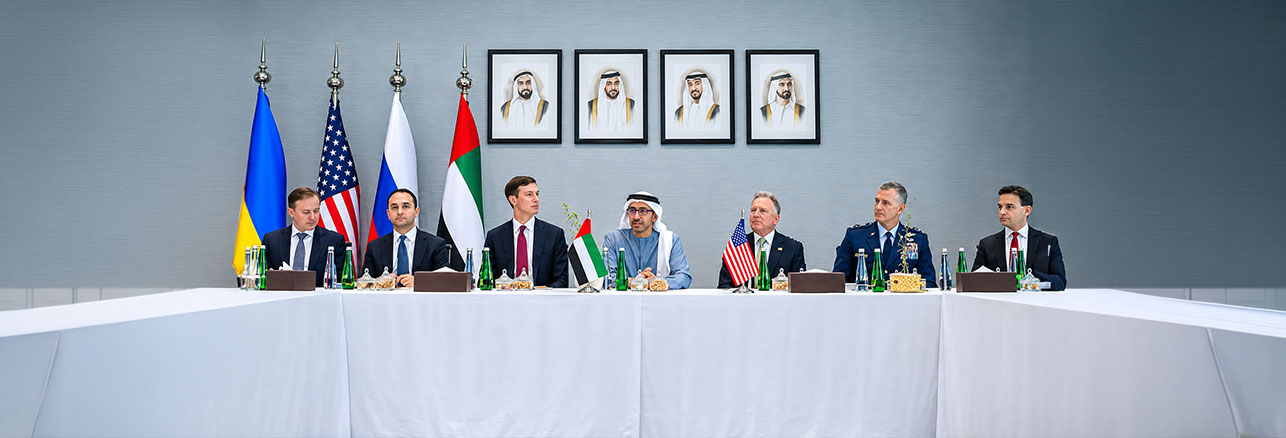
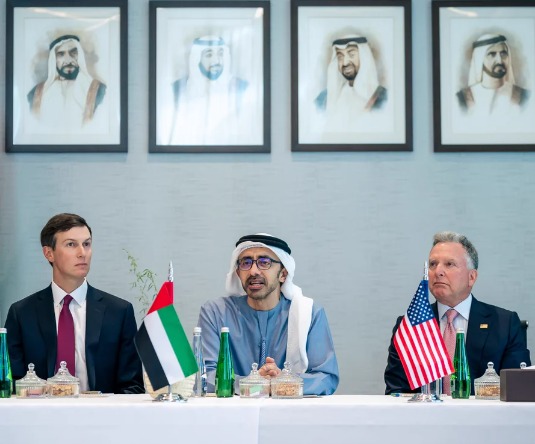
His Highness Sheikh Abdullah bin Zayed Al Nahyan, UAE Deputy Prime Minister and Minister of Foreign Affairs, attended the opening of the third round of trilateral talks, reaffirming the country's support for efforts aimed at achieving a political settlement.
Sheikh Abdullah conveyed the greetings of UAE President His Highness Sheikh Mohamed bin Zayed Al Nahyan to US President Donald Trump, Russian President Vladimir Putin and Ukrainian President Volodymyr Zelenskyy, as well as to the participating delegations.
He expressed appreciation for the confidence placed in the UAE and its established relationships with all three countries, emphasising the Emirates' commitment to facilitating dialogue and bringing differing positions closer together.
Sheikh Abdullah reiterated the UAE's belief that sustainable solutions to international conflicts can only be achieved through diplomacy, constructive engagement and de-escalation.
The country's role extends beyond providing a venue for negotiations. Through its diplomatic relationships with Washington, Moscow and Kyiv, Abu Dhabi offers an environment in which parties with sharply differing positions can maintain communication and explore potential areas of agreement.
Could Abu Dhabi Help Shape a New European Security Framework?
The significance of the Abu Dhabi negotiations may ultimately extend beyond the immediate outcome of the current round.
If the United States succeeds in advancing a diplomatic process that combines efforts to end the war with discussions on Europe's long-term security, the meetings could represent an important step towards a broader strategic dialogue.
However, substantial challenges remain. Territorial sovereignty, security guarantees, military arrangements and Europe's participation in future agreements continue to divide the negotiating parties.
The persistence of military operations during the talks also demonstrates the distance between diplomatic engagement and a lasting settlement.
Nevertheless, the resumption of direct negotiations after months of limited progress, together with the expansion of discussions to include wider European security concerns, marks a significant development in international diplomatic efforts.
For Abu Dhabi, the meetings represent another important moment in its emergence as a centre for high-level international dialogue.
As the world watches for signs of progress, the UAE capital is providing a diplomatic platform where two interconnected questions are being addressed: how to bring the war in Ukraine to an end, and how to establish a more stable European security order in the years ahead.
Whether these discussions lead to an immediate breakthrough or a longer negotiating process remains uncertain. What is clear is that the talks in Abu Dhabi have placed the UAE at the centre of a diplomatic initiative whose implications could extend well beyond the current conflict.
AVIAMOST – International Coverage from Abu Dhabi