


















Abu Dhabi at the Heart of Global Diplomacy: Moscow, Washington and Kyiv Discuss the Road Ahead
AVIAMOST INTERNATIONAL
International Political Analysis
ABU DHABI, November 11, 2026
Abu Dhabi is no longer simply a venue for another round of Russian-Ukrainian negotiations. The UAE capital has emerged as an important platform for international diplomacy, bringing together competing geopolitical interests at a critical moment when the conflict in Ukraine is raising questions that extend far beyond the battlefield.
At the centre of these discussions are the future of European security, relations between Moscow and Washington, and the broader international arrangements that could emerge in the aftermath of the war.
The trilateral negotiations involving Russia, the United States and Ukraine carry particular significance, not only because they bring together the principal parties involved in the conflict, but also because of the scope of issues under consideration. These include security guarantees, disputed territories, military arrangements and the possibility of reassessing Europe's existing security architecture.
Abu Dhabi Brings Moscow, Washington and Kyiv to the Negotiating Table
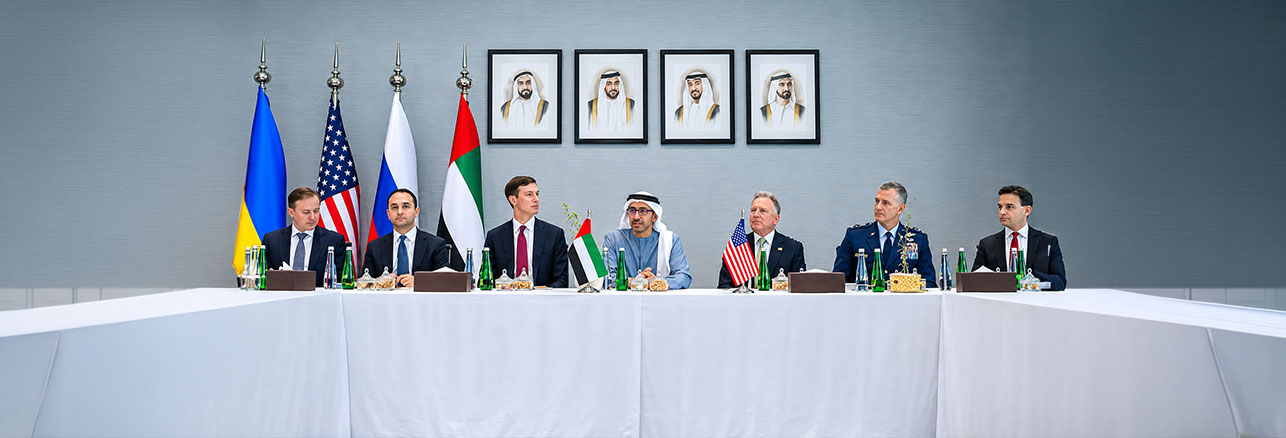
Direct negotiations began in Abu Dhabi on November 10, with discussions lasting more than four hours before continuing on November 11.
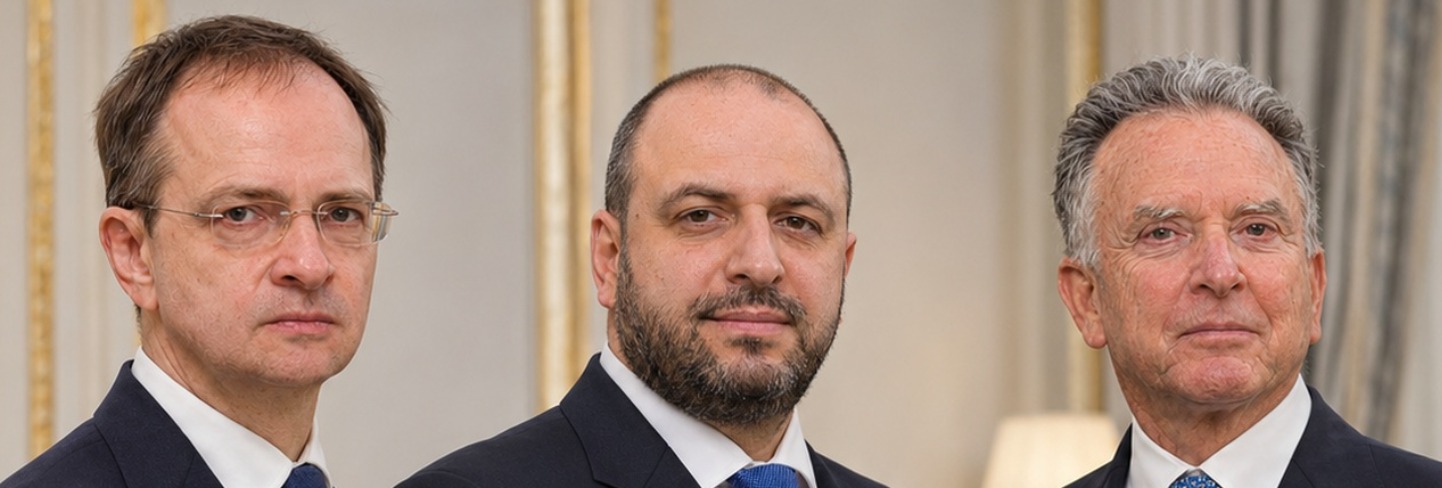
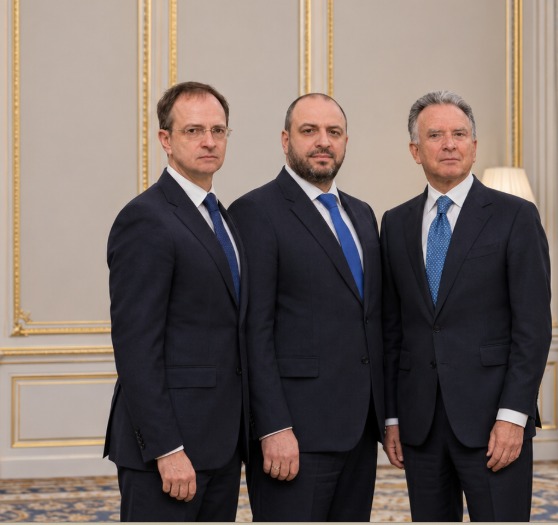
The talks brought together senior representatives from all three countries. The American delegation included special envoy Steve Witkoff and Jared Kushner, while Russia was represented by Vladimir Medinsky and Igor Kostyukov. Ukraine's delegation included Rustem Umerov and Kyrylo Budanov.
The opening session was also attended by His Highness Sheikh Abdullah bin Zayed Al Nahyan, UAE Deputy Prime Minister and Minister of Foreign Affairs, highlighting the Emirates' role in supporting diplomatic engagement and providing channels of communication between the parties.
The nature of the discussions suggests that the negotiating process has moved beyond the immediate question of a ceasefire to examine the political and security arrangements that could shape relations across Europe in the years ahead.
A Notable Diplomatic Signal: Moscow Acknowledges American Efforts
One of the more significant political signals emerging from the negotiations has been the positive remarks attributed to Vladimir Medinsky, head of the Russian delegation, regarding the American negotiating team.
His expressions of appreciation for US diplomatic efforts deserve attention in the wider context of Russian-American relations.
Despite the profound strategic differences that continue to characterise relations between Moscow and Washington, such remarks suggest that practical cooperation remains possible within the negotiating process.
They may also indicate a recognition that reaching a political settlement requires both sides to engage as negotiating partners, even while maintaining fundamentally different positions on major international issues.
This does not necessarily signal a broader strategic understanding between Russia and the United States. It does, however, underline the importance of maintaining diplomatic channels and suggests that political pragmatism may, in certain circumstances, create opportunities for dialogue.
The central question is whether Washington can translate this willingness to engage into meaningful progress between Moscow and Kyiv, whose positions remain divided on several essential issues.
European Security Moves Beyond the Ukrainian Battlefield
A particularly important development in the Abu Dhabi negotiations is the emergence of Europe's future security architecture as a major subject of discussion.
According to remarks attributed to Medinsky and reported by Sputnik Arabic, the negotiations addressed the structure of European security, with some areas of understanding identified alongside calls for a comprehensive reassessment of existing arrangements.
The Russian delegation reportedly raised questions about the effectiveness of the current European security system and the possibility of developing a framework capable of ensuring more sustainable stability.
This position reflects Moscow's longstanding view that the Ukrainian conflict cannot be separated from broader questions concerning relations with the West, NATO's role, strategic influence and the regional balance of military power.
From this perspective, a potential settlement would involve more than an agreement between Moscow and Kyiv. It could also require wider understandings involving the United States and European governments.
For Ukraine and its European partners, however, any such arrangements would need to address questions of sovereignty, national security and the right of states to determine their own political and defence priorities.
The challenge facing negotiators is therefore to explore whether a European security framework can accommodate these competing positions without undermining the principles on which a durable settlement would depend.
Prisoner Exchanges Offer a Potential Humanitarian Breakthrough
Among the practical developments reported during the latest round of discussions is an agreement in principle concerning a large-scale exchange of prisoners between Russia and Ukraine, with further details expected to be announced subsequently.
If implemented, such an agreement would represent an important humanitarian step, although it would not necessarily indicate that a comprehensive settlement to the conflict is imminent.
Prisoner exchanges and other humanitarian measures frequently provide an initial opportunity to build confidence between parties engaged in conflict.
They can deliver immediate benefits to affected families while creating a more constructive atmosphere for negotiations on difficult political and security questions.
In this context, progress on humanitarian issues could become a meaningful early test of the parties' ability to turn diplomatic discussions into concrete outcomes.
Are Moscow and Washington Moving Towards a Broader Understanding?
The diplomatic developments unfolding in Abu Dhabi reveal a significant contrast.
While political and military tensions between Russia and Western governments remain substantial, the negotiating process is demonstrating that practical engagement between Moscow and Washington is still possible.
Medinsky's positive comments regarding American negotiators form part of this wider picture, suggesting that respectful diplomatic exchanges may help reduce tensions and create opportunities for gradual progress.
Nevertheless, considerable obstacles remain.
Territorial disputes, security guarantees, Ukraine's future strategic orientation and relations with NATO continue to represent some of the most sensitive issues in the negotiations.
No comprehensive peace agreement or final ceasefire settlement has been announced.
It would therefore be premature to interpret constructive diplomatic language as evidence of a fundamental shift in Russian-American relations.
What the negotiations do demonstrate is the continued relevance of direct dialogue at a time when the political, military and economic consequences of the war remain substantial.
The UAE's Growing Role in International Diplomacy
Beyond the immediate positions of Russia, Ukraine and the United States, the choice of Abu Dhabi as the venue for these negotiations carries particular significance for the United Arab Emirates.
Over recent years, the UAE has strengthened its position as a platform for international dialogue, supported by its relationships with a diverse range of global partners and its ability to provide an environment conducive to diplomatic engagement.
The presence of senior Emirati officials at the opening of the talks reinforces the country's commitment to facilitating communication and supporting efforts aimed at peaceful conflict resolution.
In an increasingly complex geopolitical environment, the effectiveness of diplomacy is not measured solely by the agreements ultimately signed.
It is also reflected in the ability to bring opposing parties together, sustain communication during periods of heightened tension and create opportunities for constructive engagement when political differences appear particularly difficult to overcome.
Abu Dhabi's role in the current negotiations illustrates this approach.
By hosting delegations whose governments maintain sharply contrasting positions, the UAE is contributing to the diplomatic conditions necessary for dialogue, even when the prospect of a comprehensive settlement remains uncertain.
The meetings also reflect the broader evolution of the Emirates' international profile, with diplomacy and conflict mediation becoming increasingly visible elements of its global engagement.
The Next Chapter: Ending the War or Reshaping Europe's Security Order?
The most important question emerging from the Abu Dhabi negotiations is not simply when the war in Ukraine might end, but what political and security arrangements could follow.
Will the discussions ultimately produce an agreement focused primarily on ending military operations, or could they open the door to a wider understanding between Russia and the United States regarding Europe's future security?
Could the pragmatic approach reflected in recent diplomatic statements develop into a more sustainable political framework?
These questions remain unresolved.
The continuing differences between Moscow and Kyiv, the complexity of territorial and security issues, and the wider concerns of European governments suggest that any comprehensive agreement will require extensive negotiations.
Yet the resumption of direct talks among Russia, Ukraine and the United States represents an important diplomatic opening.
It also reflects an awareness among the parties that the continuation of the conflict carries substantial strategic, humanitarian and economic costs.
Abu Dhabi may not necessarily be the place where the war ultimately comes to an end. However, it has become one of the diplomatic platforms where the possible path towards a settlement is being explored.
At a time when international relations are undergoing profound change, the UAE capital stands at the intersection of two closely connected challenges: finding a political resolution to the war in Ukraine and considering the future structure of European security.
The outcome remains uncertain, but the significance of bringing Moscow, Washington and Kyiv together at the same negotiating table should not be underestimated.
The discussions in Abu Dhabi may ultimately prove important not only in determining the next phase of the Ukrainian conflict, but also in shaping the broader diplomatic dialogue that follows.
AVIAMOST INTERNATIONAL
International Political Analysis
Abu Dhabi | November 11, 2026