


















EU Leaders Gather in Dublin for First-Ever Summit on Artificial Intelligence
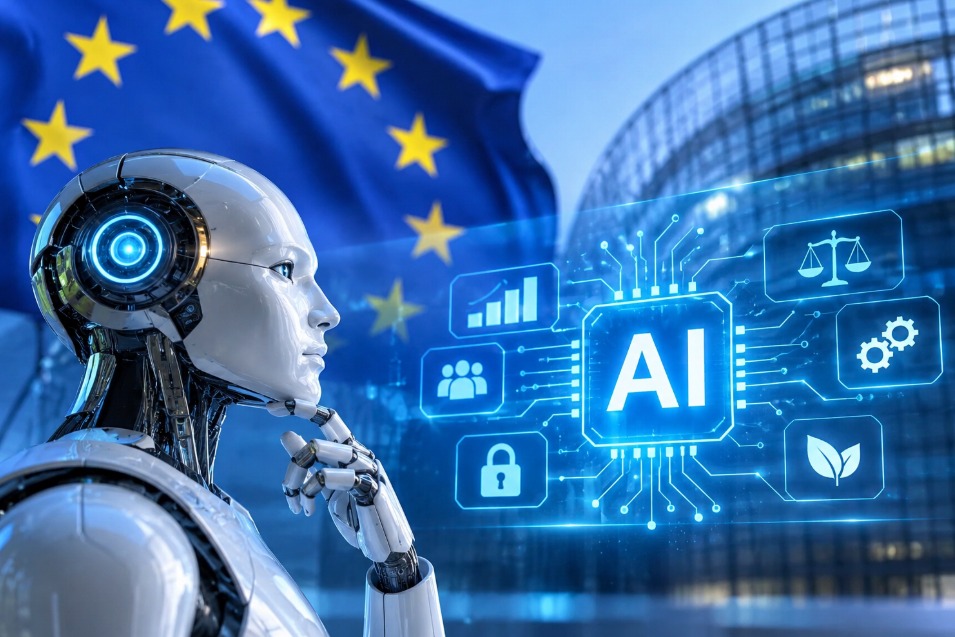
European leaders are set to define a new strategic approach to artificial intelligence, balancing technological innovation and economic competitiveness with security, ethical responsibilities and the protection of fundamental rights.
European Union leaders are gathering in Dublin for their first dedicated high-level discussions on artificial intelligence, marking an important step in the bloc's efforts to shape its technological future and strengthen its position in an increasingly competitive global AI landscape.
The landmark meeting comes as Europe seeks to accelerate innovation, reduce its dependence on foreign technologies and compete more effectively with the United States and China, while ensuring that the rapid advancement of artificial intelligence does not compromise public safety, employment or fundamental rights.
The discussions will bring together European heads of state and government alongside leading figures from the technology and scientific communities, including Arthur Mensch, Chief Executive Officer of French AI company Mistral AI, and Nobel Prize-winning researcher Geoffrey Hinton, widely regarded as one of the pioneers of modern artificial intelligence.
The summit reflects growing recognition among European policymakers that artificial intelligence is becoming a defining factor in economic growth, industrial transformation, national security and global competitiveness.
Europe Seeks to Strengthen Its Position in the Global AI Race
A central focus of the Dublin discussions will be Europe's ability to develop its own advanced artificial intelligence technologies and compete with established American and Chinese technology leaders.
Arthur Mensch, whose company Mistral AI is among Europe's most prominent developers of advanced AI models, will participate in discussions on how the continent can expand its technological capabilities and accelerate the adoption of artificial intelligence across industries.
European policymakers increasingly view the development of domestic AI infrastructure, advanced computing capabilities and innovative technology companies as essential to the bloc's long-term economic resilience.
Mistral AI has advocated a proactive approach to innovation, arguing that Europe must continue advancing its technological capabilities rather than risk falling further behind international competitors.
The debate has become particularly significant as prominent American technology executives, including OpenAI's Sam Altman and Anthropic's Dario Amodei, have raised concerns about the speed of AI development and the need for stronger safeguards.
For Europe, the challenge lies in establishing a policy environment that encourages investment and innovation while maintaining public confidence in emerging technologies.
Technology Independence Becomes a Strategic Priority
The importance of technological sovereignty is expected to feature prominently in the discussions.
In a joint letter ahead of the summit, Estonia and Finland called for stronger European mechanisms to respond to serious incidents involving artificial intelligence, while emphasising the importance of developing advanced AI systems responsibly.
Estonian Prime Minister Kristen Michal highlighted the risks associated with excessive reliance on external suppliers, drawing comparisons with Europe's previous dependence on imported fossil fuels and critical minerals.
His remarks reflect wider concerns that reliance on foreign AI infrastructure, computing resources and advanced models could expose European economies to strategic vulnerabilities.
European leaders are therefore expected to consider ways to increase investment in domestic technologies, encourage innovation and strengthen the continent's ability to develop and deploy advanced AI systems independently.
The objective is not simply to improve Europe's position in the global technology market, but also to ensure that artificial intelligence contributes to industrial productivity, economic growth and long-term strategic resilience.
Geoffrey Hinton to Address AI Safety and Societal Risks
Alongside discussions on competitiveness, the summit will examine the wider implications of artificial intelligence for society, employment, security and democratic institutions.
Geoffrey Hinton, the Nobel Prize-winning computer scientist whose research helped lay the foundations for modern AI, will participate in discussions on the potential risks associated with increasingly powerful systems.
Hinton has been among the most prominent voices warning about the societal and security implications of advanced artificial intelligence, particularly since the launch of ChatGPT in 2022 accelerated global interest in generative AI.
Together with fellow researcher Yoshua Bengio, he has called attention to the challenges posed by rapidly evolving AI capabilities and the importance of developing effective safeguards.
European leaders are expected to explore measures to protect jobs, fundamental rights and public trust, while addressing cybersecurity threats and the possible misuse of artificial intelligence.
The discussions will also consider how governments can establish effective responses to serious AI-related incidents and develop regulatory frameworks capable of adapting to technological developments.
Nvidia Leadership Crisis Adds Uncertainty to the AI Industry
The Dublin meeting is taking place amid heightened uncertainty in the global technology sector following the resignation of Jensen Huang, Chief Executive Officer of Nvidia, one of the world's leading suppliers of advanced AI computing chips.
Nvidia confirmed that Huang had stepped down, with Chief Financial Officer Colette Kress appointed interim CEO while the company searches for a permanent successor.
His departure followed reports concerning personal relationships and questions raised about potential security implications involving an individual suspected by US authorities of links to Chinese intelligence. Those suspicions have not been established as proven espionage.
The developments have drawn attention to corporate governance, technology security and the strategic importance of companies supplying critical AI infrastructure.
Technology stocks came under pressure following the announcement, highlighting the influence of major semiconductor companies on global financial markets and the wider AI industry.
Although the Nvidia developments are not formally included in the summit's agenda, an EU official indicated that participants could raise questions concerning the potential security implications of the situation.
The episode has added another dimension to discussions about technological dependence, corporate accountability and the concentration of critical AI capabilities within a relatively small number of global companies.
Balancing Innovation, Regulation and Economic Growth
Experts have emphasised the importance of a comprehensive European strategy that supports innovation without overlooking the risks associated with advanced AI systems.
James Green, a researcher at the Centre for European Reform, has argued that Europe should pursue a multifaceted approach combining stronger incentives for AI development, improved access to advanced technologies, responsible deployment and effective regulatory safeguards.
Such a strategy would also require international cooperation to address risks that extend beyond national borders.
For European businesses, the economic opportunities are substantial. Artificial intelligence has the potential to improve productivity, transform manufacturing, accelerate scientific research and support innovation across healthcare, financial services, transport and other sectors.
However, policymakers face growing pressure to ensure that technological progress benefits society while protecting employment, privacy and public trust.
A Defining Moment for Europe's Technological Future
The first dedicated AI discussions among EU leaders represent an important moment in Europe's efforts to establish a more coordinated technological strategy.
The decisions and policy directions emerging from Dublin could influence the bloc's approach to investment, innovation, regulation and international cooperation in the years ahead.
As artificial intelligence continues to reshape industries and economies worldwide, Europe is seeking to define a model that combines technological ambition with responsible governance.
The central challenge will be translating these priorities into practical measures that enable European companies to innovate and compete internationally while ensuring that advanced technologies remain secure, trustworthy and beneficial to society.
With the United States and China continuing to lead significant areas of AI development, the Dublin summit underlines Europe's determination to play a more influential role in shaping the next generation of technological progress.