











Russian Social Club creates space for meaningful connection
In a world where communication is becoming increasingly fast-paced and transactional, spaces that foster genuine human connection have become more valuable than ever. Not random encounters, but a sense of alignment in values, lifestyle, and mindset.
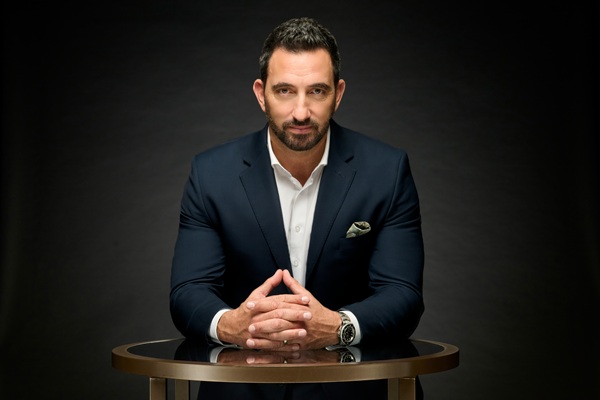
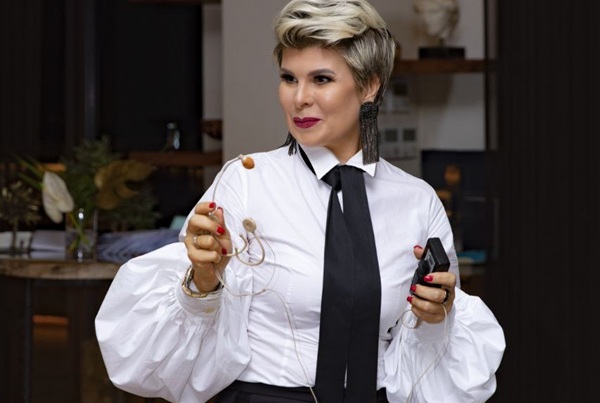
Community producer, relationship strategist, and co-founder of the Russian-speaking women’s community Russian Speaking Social Club, Natalia Konyakhina works precisely at this intersection. Her projects bring together culture, intellectual engagement, wellness, and modern forms of social interaction.
We spoke with Natalia about why it has become so difficult to find “your people,” how events evolve into communities, and why meaningful connections begin not with networking, but with inner alignment.
You work at the intersection of culture, business, and community building. Where do you draw the line between a project and a mission?
At some point, I realized it was no longer about the projects themselves. Projects can end, evolve, change direction, or grow in scale, but the reason they were created in the first place always remains. Over time, that reason become the mission.
At first, you think you're organizing events. Then you realize that people are not seeking a format — they're seeking a feeling and the connections that emerge within it. The question shifts from “Where should I go?” to “Who do I want to be with?” To me, that shift says a lot.
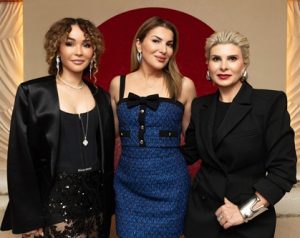
What role does the Russian Speaking Social Club play in Dubai today?
We founded the community together with Guzal Ergasheva and Anait Toniyants. From the outside, people often associate the club with beautifully curated events, a certain level of quality, and a private format. But the essence runs much deeper.
For many members, the club has become a place where they belong. This is especially important in Dubai, a city defined by constant movement and fast-paced interactions.
I like the idea that a community is not an audience. It is an environment where people can remain true to themselves.
One of the community's projects is the intellectual game IQ ON. Why did you choose this format?
We develop IQ ON in partnership with Tatiana Budaeva. Initially, it was simply an intellectual game. But very quickly, it became clear that it wasn't really about the questions and answers.
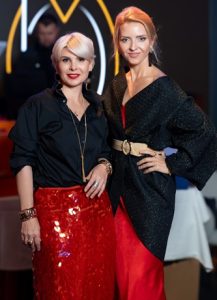
It's an environment where people reveal themselves through their thinking, reactions, sense of humor, and ability to listen and build upon someone else's ideas.
Connections form naturally here, not through formal small talk, but through genuine dialogue. At some point, we noticed that participants continued communicating after the games. They launched joint projects, became friends, and started collaborating professionally.
That's when we realized that we weren't creating events. We were creating an environment where meaningful coincidences could happen.

What is the core philosophy behind Wellness Sensation, and what were you trying to create with it?
I believe that every external environment begins with a person's internal state. It's difficult to build meaningful relationships with others if you're disconnected from yourself. The philosophy behind Wellness Sensation is simple: first, you bring yourself into alignment; then you shape the world around you.
It is a space dedicated to inner balance – through the body, breath, mindfulness, slowing down, and self-awareness. I wanted to create a format that helps people return to themselves.
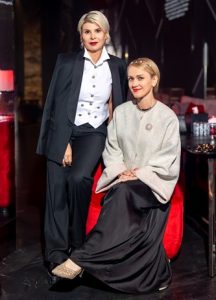
When did you realize you were building something larger than just events and why do you think it’s become harder for people to find like-minded people they truly resonate with?
The turning point wasn’t when the projects became bigger. It was when I realized they were starting to influence people’s decisions and, in some cases, even the direction of their lives.
There’s a saying I deeply connected with: The samurai has no goal, only a path.
Today, we live in a world shaped by roles, labels, and carefully curated identities. People have become exceptionally good at creating impressions, yet fewer seem comfortable simply being themselves.
Real connection happens when there’s no need to perform when you don’t have to meet expectations, maintain an image, or play a role. It happens when you can simply exist as you are.
That’s why communities built on trust, depth, and genuine alignment have become so valuable. As the world becomes more connected digitally, finding “your people” often feels harder. We’re surrounded by more interactions than ever, yet meaningful belonging remains rare.
Have you ever had to reinvent yourself and your strategy?
Reinvention is inevitable, although not everyone is willing to embrace it. I've gone through that process more than once. If you're moving forward, old structures eventually stop working. But I don't see that as a crisis. I see it as movement.
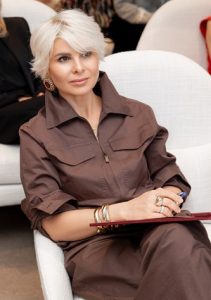
What tells you that you're on the right path?
My inner state. In yoga, there is the concept of union – a state of alignment where unnecessary effort disappears. You stop trying to control every detail, yet life continues to unfold in the right direction. Without tension, but with a deep sense of meaning. And it's in that state that you know you're exactly where you're meant to be.
Natalia Konyakhina's story is not only about building communities. It is about something deeper: helping people return to themselves through connection with others.
In her projects, connection ceases to be a formality and becomes an experience — authentic, meaningful, and almost intuitive.
Perhaps that is the new luxury of our time: not access, status, or exclusivity, but the opportunity to be among people who truly resonate with you without a role to play, without effort, and entirely as yourself