















Russia Rejects Yalta Comparisons Ahead of Trump-Xi-Putin Summit in China
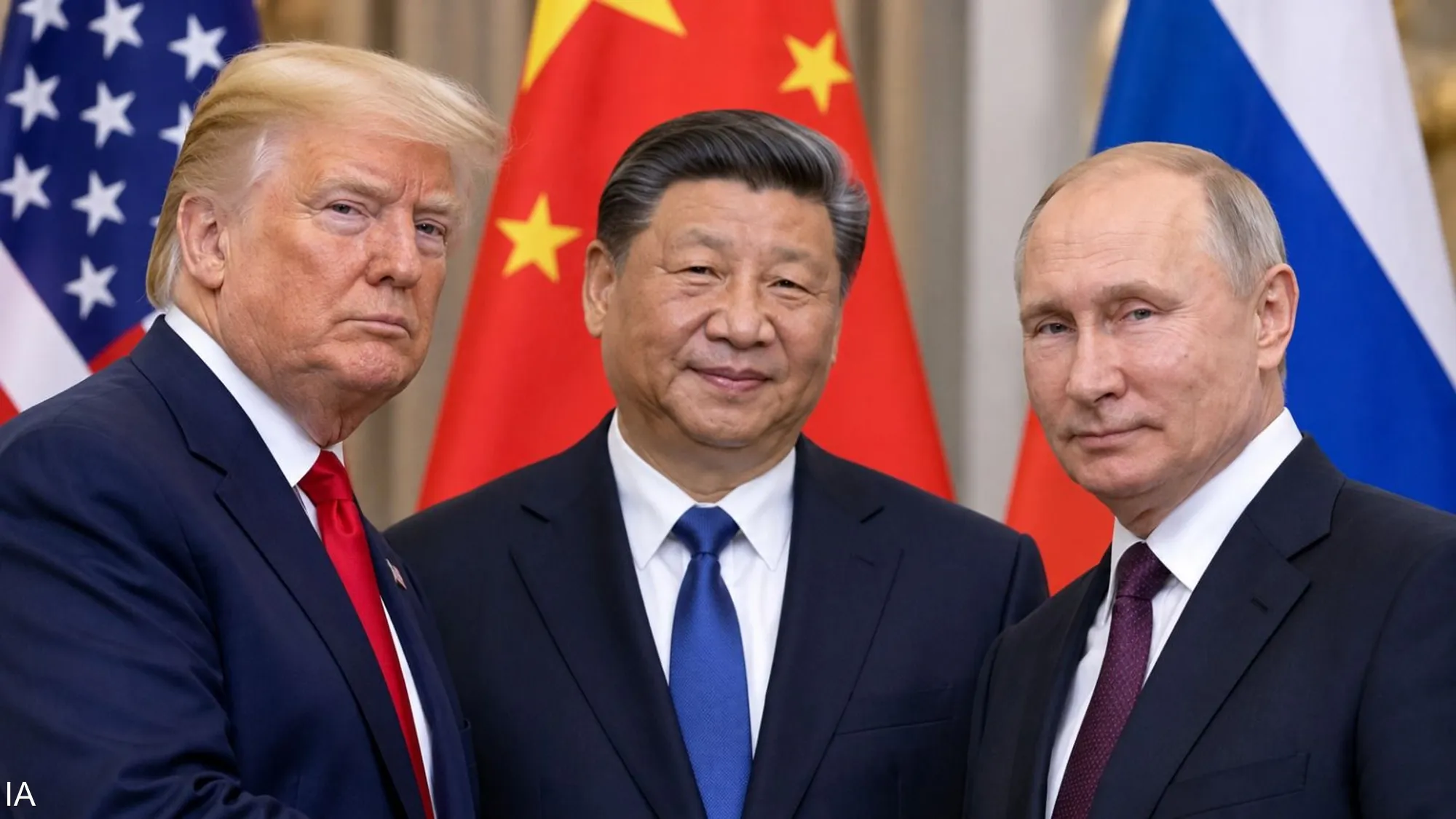
The Kremlin insists that the upcoming meeting between the leaders of Russia, China and the United States will not determine the fate of other nations, as concerns grow in Kyiv over a possible reshaping of global spheres of influence. Nuclear disarmament, Iran and the war in Ukraine are expected to dominate the discussions.
The Kremlin has rejected comparisons between the anticipated summit involving Russian President Vladimir Putin, Chinese President Xi Jinping and US President Donald Trump and the historic Yalta Conference of 1945, insisting that the three leaders have no intention of deciding the future of other countries.
The meeting, scheduled for Thursday in the Chinese city of Shenzhen on the sidelines of the Asia-Pacific Economic Cooperation (APEC) summit, comes at a sensitive moment for international diplomacy, as the world's major powers confront disputes over nuclear security, regional conflicts and the future of global strategic relations.
The prospect of the three leaders meeting has revived debate over whether negotiations between powerful nations could lead to broader understandings on international security, potentially affecting countries not directly represented at the negotiating table.
For Ukraine, the historical parallels have particular significance.
President Volodymyr Zelenskyy has warned that the summit could resemble a new division of spheres of influence, drawing comparisons with the Yalta Conference, where the leaders of the United States, Britain and the Soviet Union discussed the political arrangements that would shape post-war Europe.
Moscow Rejects the Historical Parallel
Responding to concerns expressed by Kyiv, the Kremlin dismissed suggestions that the upcoming summit could become a modern version of Yalta.
A Kremlin spokesperson described such comparisons as political interpretations disconnected from the reality of the planned discussions.
The spokesperson also rejected the idea that Russia and China would participate in negotiations intended to determine the destiny of other countries.
Moscow maintained that it opposes any attempt by foreign powers to decide Russia's future and would not seek to deny other nations the same right to self-determination.
The statement appears intended to distinguish the anticipated meeting from historical negotiations associated with the division of political influence among major powers.
Yet the controversy surrounding the summit illustrates the difficulty of separating strategic dialogue between global leaders from the concerns of countries whose security and sovereignty may be affected by its outcomes.
The Shadow of Yalta
The historical reference carries considerable political weight.
In February 1945, US President Franklin D. Roosevelt, British Prime Minister Winston Churchill and Soviet leader Joseph Stalin met in Yalta as the Second World War approached its conclusion.
Their discussions helped shape arrangements for post-war Europe and became closely associated with the emergence of a political order divided between Western and Soviet spheres of influence.
Although the circumstances of 2026 differ fundamentally from those of 1945, the comparison reflects anxieties over the possibility that major powers could negotiate security arrangements with far-reaching consequences for other countries.
For Kyiv, the concern is that direct engagement between Washington, Moscow and Beijing could give Russia greater diplomatic leverage while the war in Ukraine remains unresolved.
Ukrainian officials have warned that the meeting could embolden Putin rather than accelerate progress towards a negotiated settlement.
Those concerns come amid intensified diplomatic activity aimed at bringing an end to a conflict that has continued for more than four years.
Nuclear Security and Regional Conflicts on the Agenda
China has released limited information about the summit's agenda, indicating that the leaders will hold in-depth discussions on safeguarding global peace and strengthening strategic stability in relations between major powers.
The broad formulation leaves considerable room for debate over the issues that may emerge during the meeting.
Trump has indicated that nuclear disarmament will be among the most difficult subjects under consideration, alongside the conflicts involving Iran and Ukraine.
The inclusion of nuclear issues gives the summit significance beyond the immediate geopolitical disputes confronting the three governments.
Russia and the United States possess the world's largest nuclear arsenals, while China has been expanding its strategic capabilities. Any serious discussion involving all three countries could therefore have implications for the future of arms control and international security.
However, the presence of nuclear disarmament on the agenda does not necessarily suggest that a concrete agreement is within reach. Differences over military capabilities, verification mechanisms and strategic priorities remain substantial.
The conflicts involving Ukraine and Iran add further complexity, placing questions of regional security alongside the broader relationship between Washington, Moscow and Beijing.
A Summit Under International Scrutiny
The meeting is expected to attract close attention from European governments and other international partners concerned about the direction of relations among the three powers.
For Washington, the discussions offer an opportunity to engage directly with two of its principal strategic competitors on issues carrying global consequences.
For Moscow, the summit provides another channel for dialogue with the United States while maintaining its partnership with China.
Beijing, as host, has emphasised the importance of international stability and communication among major powers.
Yet the differing interests of the participants may limit the scope for substantive agreements.
The central question is whether the summit will produce practical understandings on nuclear security and regional conflicts or remain primarily a forum for exchanging positions.
The Future of Global Security
The Kremlin's rejection of the Yalta comparison highlights a broader debate over the role of major-power diplomacy in an increasingly fragmented international system.
Direct dialogue between Washington, Moscow and Beijing may help manage strategic competition and reduce the risks of confrontation. At the same time, any negotiations concerning regional conflicts inevitably raise questions about the participation and interests of countries directly affected.
For Ukraine, the principle of sovereignty remains central to its position. For Russia, broader security arrangements and relations with the West continue to shape its diplomatic priorities. For China and the United States, maintaining strategic stability must be balanced against economic competition and political disagreements.
As attention turns to Shenzhen, the significance of the summit will depend less on historical comparisons than on whether the leaders can translate their discussions into concrete diplomatic outcomes.
The meeting may open new channels of communication among the three powers, but it remains uncertain whether it can narrow the differences that continue to define their relationships.
For now, the debate over Yalta underscores a question that remains central to international diplomacy: how can the world's most powerful states negotiate global security without diminishing the sovereignty and political independence of others?