

















Why social connection shapes mental health and longevity: Insights from Christiana Maxion

In an era of digitalization and constant connectivity, a paradox is becoming increasingly evident: the easier it is to “stay in touch,” the harder it becomes to truly connect. As conversations around mental health move into the mainstream, another equally important factor is gaining attention – the quality of real-life social connections and their impact on both emotional and physical well-being.
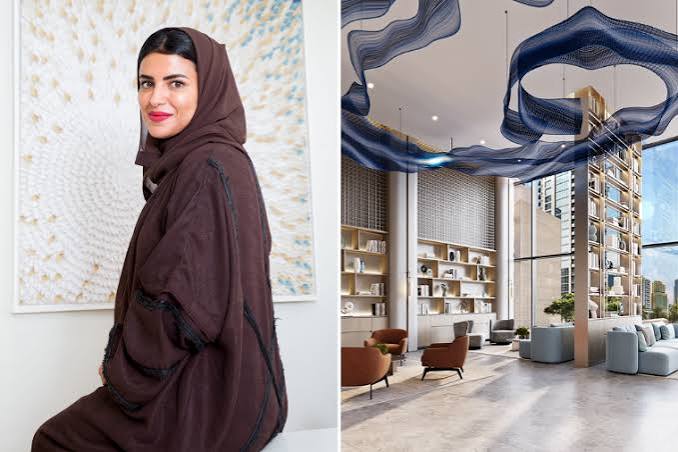
The entrepreneur whose work directly reflects this shift is Christiana Maxion – Founder and CEO of MAXION, a social platform in the UAE designed to turn digital introductions into real-world, offline relationships. Her product philosophy, “connect first, match later,” is built around prioritizing lived human interaction over endless virtual communication. At the core of her approach is a simple belief: technology should not replace human connection, but bring it back into real life.
Today, this topic extends far beyond psychology and has become part of a broader discussion on health and longevity. A growing body of research confirms that social engagement is not a secondary aspect of life, but one of the fundamental determinants of both its quality and its duration.
Loneliness as a Systemic Health Risk
Modern scientific data increasingly frames loneliness not as an emotional state, but as a health risk factor. The absence of stable social connections raises stress levels, disrupts sleep quality, affects hormonal balance, and impacts overall physical functioning.
Studies show that chronic social isolation can be as detrimental to health as well-known risk factors such as smoking or physical inactivity. Over time, this manifests not only emotionally but physiologically: reduced energy levels, impaired cognitive function, and increased vulnerability to various diseases.
Why In-Person Interaction Works Differentl
Despite the rise of digital platforms, face-to-face interaction remains a key driver of emotional resilience. Phone calls, messages, and online communication cannot fully replicate non-verbal cues, emotional synchronization, and the physical sense of presence.
In-person interaction creates what researchers often refer to as “social stress regulation” — a state in which the body recovers more efficiently through emotional support and human presence. This explains why individuals with rich social lives often appear more relaxed, energetic, and externally composed.
Longevity and the Blue Zones Phenomenon
Particular interest has been drawn to the so-called Blue Zones — regions of the world with the highest concentrations of centenarians. These include Okinawa (Japan), Sardinia (Italy), Ikaria (Greece), Nicoya (Costa Rica), and Loma Linda (USA).
Despite cultural and lifestyle differences, these regions share one defining factor: strong social structures. People are embedded in stable communities, maintain close family and friendship ties, regularly engage with others, and experience a strong sense of belonging.
In these contexts, longevity is determined not only by diet or physical activity, but also by a continuous sense of connection to others.
Social Life as a Marker of Inner and Outer Well-being
Beyond medical implications, social activity also has a visible impact on appearance. Individuals with active social lives are often perceived as more vibrant, open, and energetic. This is not merely an aesthetic observation but a reflection of internal physiological balance.
Emotional well-being is closely linked to hormonal regulation, stress levels, and recovery capacity. As a result, stable social connections become not only a psychological resource but also a factor influencing perceived youthfulness and vitality.
The Evolving Role of Technology
Modern platforms and digital services increasingly attempt to address loneliness, but their effectiveness depends on one key condition — the transition from virtual interaction to real-world connection.
This principle underpins a new generation of social models, where technology serves not as a replacement for human contact but as an enabler of offline relationships and real communities. In this context, MAXION represents an example of a platform designed not to deepen digital isolation, but to reduce it by facilitating meaningful in-person encounters and sustainable human connections.
Social relationships are gradually shifting from being seen as a lifestyle element to becoming part of a preventive health framework. Increasing evidence suggests that humans cannot be fully healthy or resilient in isolation.
Longevity in its modern sense is not defined solely by genetics, nutrition, or physical activity. It is, above all, the quality of relationships, the sense of belonging, and the ability to consciously and maturely build reciprocal, stable human connections.
Within this context, simple human connection gains new significance — as one of the most underestimated yet fundamental factors of a long and fulfilling life.