



















Xi Jinping, Donald Trump and Vladimir Putin to Hold Landmark Summit on World Peace and Global Security
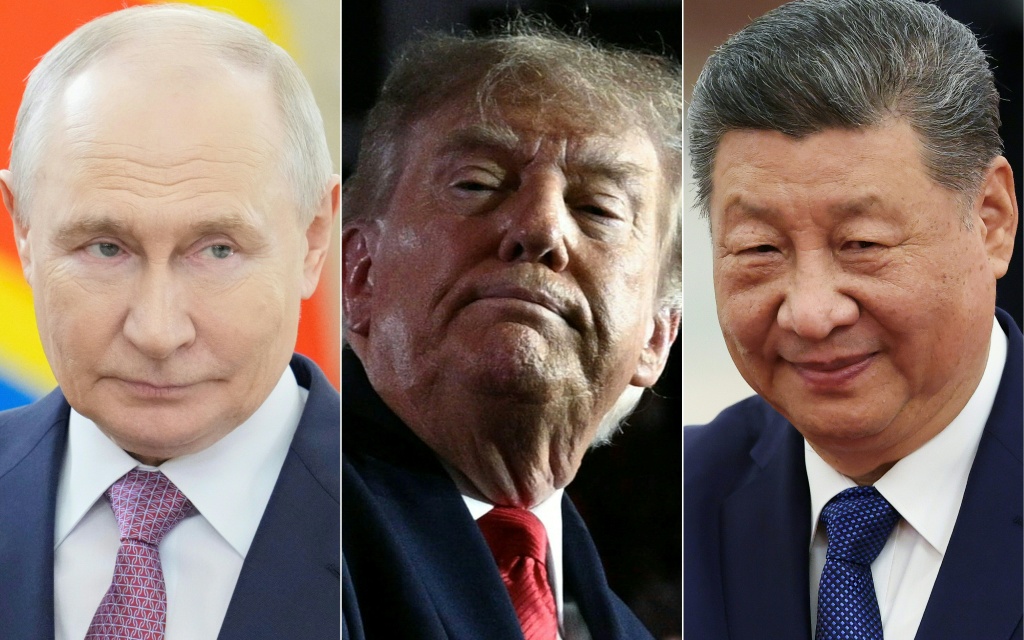
The leaders of three of the world's most influential powers — Chinese President Xi Jinping, US President Donald Trump and Russian President Vladimir Putin — are preparing for a historic trilateral summit in the southern Chinese city of Shenzhen, where discussions are expected to focus on global peace, nuclear security and the future of international relations.
Scheduled for Thursday, November 19, on the sidelines of the Asia-Pacific Economic Cooperation (APEC) summit, the meeting will mark the first face-to-face trilateral encounter between the three presidents, bringing together leaders whose decisions have far-reaching consequences for international security and economic stability.
Announcing the meeting on Monday, November 16, China's Foreign Ministry described the summit as a potentially significant diplomatic milestone.
Foreign Ministry spokesperson Mao Ning said the leaders would engage in extensive discussions on preserving global peace and strengthening strategic stability among major powers, describing the meeting as being of groundbreaking significance.
Beijing emphasised that stronger communication between China, Russia and the United States could help manage differences, reduce geopolitical uncertainty and promote greater international cooperation.
Nuclear Disarmament Emerges as a Central Diplomatic Challenge
One of the most closely watched issues surrounding the Shenzhen summit is the possibility of renewed negotiations on nuclear arms control.
The United States has repeatedly expressed concern over China's expanding nuclear capabilities and has called for Beijing to participate in a broader international framework aimed at limiting nuclear weapons.
China, however, has maintained that Washington and Moscow, which possess the world's largest nuclear arsenals, should make substantial reductions to their own stockpiles before expecting Beijing to enter comparable negotiations.
The debate has gained urgency following the expiration of the last major US-Russia nuclear arms control agreement in February 2026, raising international concerns over the absence of binding limits on the world's two largest nuclear arsenals.
President Trump has advocated a new and more comprehensive agreement that would include China, arguing that the future of nuclear security requires wider participation by major military powers.
Recent diplomatic exchanges suggest that the issue could receive renewed attention during the summit.
Following discussions between Chinese Foreign Minister Wang Yi and US Secretary of State Marco Rubio, the US State Department highlighted the importance of high-level dialogue in advancing international peace and nuclear disarmament.
United Nations Secretary-General António Guterres also welcomed the prospect of meaningful discussions, stressing that genuine progress towards reducing nuclear weapons would represent an important achievement for global security.
Nevertheless, significant differences remain between the three countries, and no agreement on a new nuclear arms control framework has been announced.
Iran Conflict Expected to Feature in Talks
Beyond nuclear security, the ongoing conflict involving Iran is expected to emerge as another major subject of discussion.
President Trump has indicated that the leaders are likely to address efforts to end the confrontation, which has contributed to instability across the Middle East and disrupted international energy markets.
Speaking to reporters on Sunday, the US president said the meeting would cover several issues, including nuclear disarmament and attempts to bring the war in Iran to an end.
China, one of Iran's most important economic partners, has consistently advocated diplomatic engagement as a means of resolving the crisis.
Since the outbreak of the conflict following US-Israeli strikes on Iran, Beijing has sought to maintain communication with regional governments and encourage negotiations.
The prolonged confrontation has affected neighbouring countries, disrupted maritime transportation and placed considerable pressure on global oil prices.
In recent weeks, China has hosted representatives from several Middle Eastern countries as part of efforts to encourage renewed diplomatic dialogue and prevent further military escalation.
For the Gulf states, the outcome of any diplomatic engagement concerning Iran carries particular importance.
Regional security is closely linked to the stability of energy exports, international shipping routes and global trade, especially through strategic waterways such as the Strait of Hormuz.
Any progress towards reducing tensions could therefore have significant implications for the economic outlook of the Middle East and international energy markets.
Ukraine Raises Questions Over the Summit's Diplomatic Scope
While nuclear disarmament and the conflict in Iran are expected to feature prominently, Russia's war in Ukraine presents a particularly sensitive diplomatic challenge.
According to earlier reports by The Wall Street Journal, Moscow has shown interest in using trilateral discussions to explore a possible settlement of the conflict.
However, US officials have indicated that President Trump is not expected to raise Ukraine during the Shenzhen meeting.
The issue has also prompted concerns among European leaders about the possibility of major international decisions being discussed without the direct participation of the countries most affected.
German President Frank-Walter Steinmeier recently indicated that Xi Jinping had expressed reservations about including Ukraine in the trilateral agenda, emphasising the importance of European participation in any discussions concerning the conflict.
Ukrainian President Volodymyr Zelensky has also warned against negotiations that could sideline Kyiv, raising concerns about a potential redistribution of geopolitical influence reminiscent of the historic Yalta Conference of 1945.
That meeting, involving the leaders of the United States, Britain and the Soviet Union, helped shape the post-Second World War international order.
Ukraine's Foreign Minister Andriy Sybiha has similarly expressed concern that high-level engagement with Moscow, without meaningful progress towards ending the war, could strengthen Russia's diplomatic position.
The differing perspectives underline the complexities of the planned summit and the challenge of balancing major-power diplomacy with the interests of other nations.
Shenzhen Becomes the Centre of Global Diplomacy
The choice of Shenzhen as the venue for the trilateral meeting adds further significance to the diplomatic gathering.
One of China's leading centres of innovation, technology and international trade, Shenzhen will host world leaders during the APEC summit, providing an important platform for discussions on economic cooperation and regional development.
The meeting between Xi, Trump and Putin will take place against a backdrop of increasingly complex relations among the three powers, shaped by strategic competition, economic interests and differing approaches to international security.
For Beijing, the summit presents an opportunity to reinforce its diplomatic engagement with Washington and Moscow while positioning China as an influential participant in discussions on global stability.
For Washington, the talks could provide an opportunity to explore nuclear arms reductions and diplomatic approaches to major international conflicts.
For Moscow, participation represents another high-level diplomatic engagement at a time when Russia's relations with Western governments remain strained by the war in Ukraine.
Despite their differences, the three countries share considerable influence over global security, international institutions and the future direction of major geopolitical developments.
A Defining Moment for International Relations
The forthcoming summit comes at a time when diplomatic engagement is increasingly important in addressing global security challenges.
From nuclear weapons and military conflicts to energy security and economic uncertainty, the international community faces a series of interconnected issues requiring sustained dialogue and cooperation.
The United Nations has repeatedly emphasised that reducing nuclear risks and strengthening international communication remain essential to preventing further confrontation among major powers.
However, the significance of the Shenzhen meeting will ultimately depend on whether the discussions produce concrete commitments or establish a foundation for continued diplomatic negotiations.
While expectations are high, substantial differences in strategic priorities mean that meaningful progress may require prolonged engagement beyond a single summit.
As the world's attention turns to Shenzhen, the first trilateral meeting between Xi Jinping, Donald Trump and Vladimir Putin could mark an important new chapter in major-power diplomacy. Whether it leads to tangible progress on nuclear disarmament, regional conflicts and international stability will be closely watched by governments, markets and the global community.