
















Putin in Beijing: Why the UAE may be one of the biggest beneficiaries of Russia–China cooperation
Back To Main Page: Diplomatic News, UAE News
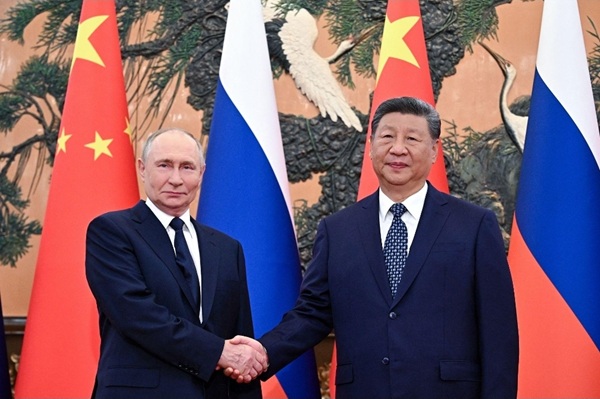
When Vladimir Putin and Xi Jinping met in Beijing, global attention focused on the growing strategic partnership between Russia and China. Yet thousands of kilometers away, another country may quietly benefit from the outcomes of their discussions. The United Arab Emirates, already positioned as a global crossroads for trade, finance, logistics, and diplomacy, stands to gain significantly as economic ties between Moscow and Beijing continue to deepen.
When President Vladimir Putin arrived in Beijing for his latest meeting with President Xi Jinping, international media focused on the symbolism of the encounter between two leaders who have developed one of the world's most significant strategic partnerships. Yet the true importance of the summit extends far beyond Moscow and Beijing. Its consequences will be felt across the Middle East, particularly in the Gulf region and the United Arab Emirates.
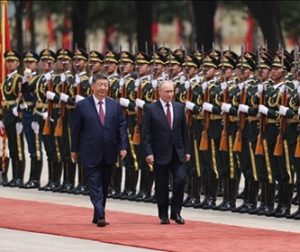
The Russia–China relationship has evolved from a partnership of convenience into a strategic alignment built on mutual interests in energy, trade, technology, and global influence. As Western sanctions continue to reshape international markets, Russia has deepened its economic ties with China, while Beijing has secured access to vital energy supplies and expanded its geopolitical reach.
For the Gulf states, this development presents both opportunities and challenges.
China remains the largest importer of energy in the world and continues to rely heavily on supplies from the Gulf. While Russia has become a major energy partner for Beijing, China is unlikely to place its energy security in the hands of a single supplier. Diversification remains a central pillar of Chinese policy. This means that Saudi Arabia, the UAE, Kuwait, Iraq, and other Gulf producers will continue to play an essential role in China's long-term energy strategy.
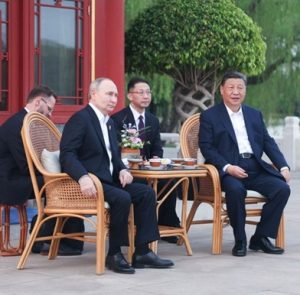
The implications for OPEC+ are equally significant. Russia remains a key participant in the alliance that has helped stabilize global oil markets over recent years. Closer coordination between Moscow and Beijing provides greater visibility regarding future energy demand, helping producers plan production strategies with more confidence. At the same time, Gulf exporters must remain competitive as Russia continues to offer attractive energy supplies to Asian markets.
The United Arab Emirates occupies a particularly unique position in this changing landscape.
Unlike many countries that are forced to choose sides in an increasingly divided world, the UAE has successfully maintained strong relationships with all major powers. It enjoys strategic ties with the United States, growing economic relations with China, and constructive engagement with Russia. This balanced approach has transformed the country into a global platform where East and West continue to meet, invest, and conduct business.
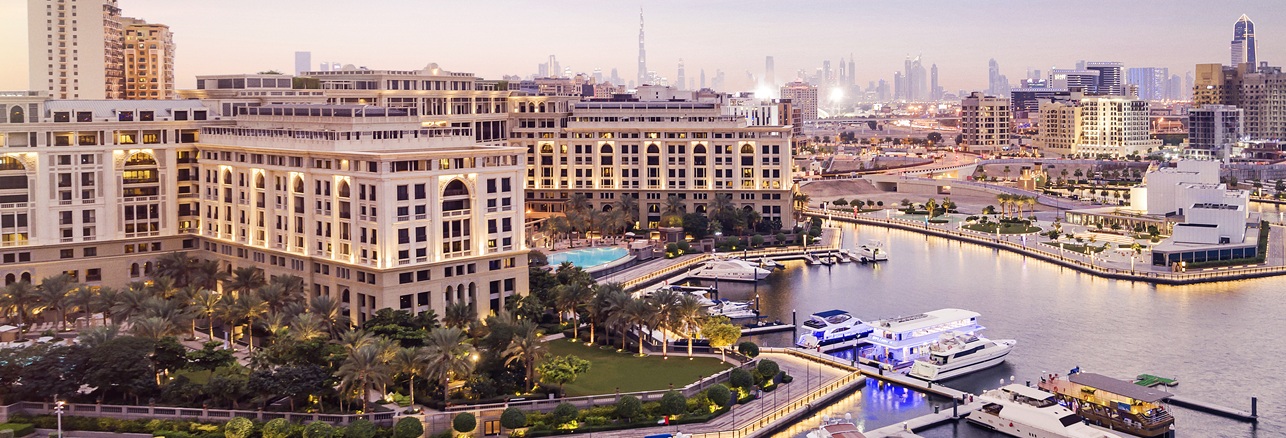
Dubai's role as a logistics, financial, and commercial hub becomes even more valuable as trade flows between Asia, the Middle East, Africa, and Europe expand. Chinese companies continue to establish regional headquarters in the UAE, while Russian businesses increasingly view Dubai as a gateway to international markets. The result is a growing concentration of capital, talent, and commercial activity that reinforces the UAE's status as one of the world's most connected economies.
Beyond economics, the summit also highlights an important geopolitical reality. Both Russia and China view stability in the Gulf as essential to global energy security. Any disruption to shipping lanes, energy infrastructure, or regional trade routes would have direct consequences for their economic interests. As a result, the Middle East is no longer merely a supplier of energy; it has become a strategic region in the broader architecture of Eurasian cooperation.
The larger message emerging from Beijing is clear. The world is moving toward a more multipolar order in which influence is shared among several major centers of power rather than concentrated in one. Whether one views this development positively or negatively, it is increasingly shaping international politics and commerce.
For the UAE and the Gulf, the question is no longer whether this transformation is taking place. The question is how effectively the region can capitalize on it.
Main objectives of the presidential Russian visit to China
President Vladimir Putin paid a state visit to China on 19–20 May 2026, where he met Chinese President Xi Jinping in Beijing. The visit came only a few days after U.S. President Donald Trump's visit to China, making Beijing the center of major global diplomacy during that period. The objectives of this visit were:
- Strengthening the Russia–China strategic partnership: Xi and Putin reaffirmed their close relationship and described Russia–China ties as a major stabilizing force in world affairs. The two leaders have now met more than 40 times since Xi became China's leader.
- Economic and energy cooperation: Their discussions focused heavily on trade, energy, and technology cooperation. Russia hopes to expand gas exports to China through the proposed Power of Siberia 2 pipeline.
- Geopolitical coordination: The two leaders emphasized a "multipolar world" and criticized what they see as excessive Western influence in international affairs.
Reports indicate that Russia and China signed more than 20 agreements covering:
- Trade
- Education
- Technology
- Scientific cooperation
- Strategic coordination between the two countries
China and Russia are coordinating around energy security
Russia has become one of China's largest energy suppliers after Western sanctions redirected Russian oil and gas exports away from Europe. During the Beijing meetings, energy was again at the center of discussions, and both sides emphasized expanding cooperation in oil, gas, and strategic resources. For the Gulf, this means that China wants multiple energy suppliers, not dependence on a single source. Russia wants guaranteed long-term buyers in Asia.
The Gulf states, especially the UAE and Saudi Arabia, remain essential because China prefers diversification rather than relying entirely on Russian energy.
In other words, Russia is becoming more important to China, but not at the expense of the Gulf.
The Beijing summit was not a military alliance meeting. It was a strategic signal that China and Russia want a more "multipolar" world where power is distributed among several major centers rather than dominated by a superpower.
For the UAE, this actually aligns with the country's long-standing foreign policy approach. It will
maintain strong relations with the United States.
Deepen economic relations with China,
Keep constructive ties with Russia and
Avoid being forced into one geopolitical camp.
From a historical perspective, the Putin–Xi meeting is another sign that the center of global economic gravity continues to shift toward Asia. The UAE has recognized this trend earlier than many countries and has positioned itself accordingly.
From a historical perspective, the Putin–Xi meeting is another sign that the center of global economic gravity continues to shift toward Asia. The UAE has recognized this trend earlier than many countries and has positioned itself accordingly.The UAE's value is no longer based primarily on oil. Its strategic value increasingly comes from being a trusted platform where countries that may disagree politically can still do business. Whether it is China, Russia, Europe, India, Africa, or the United States, they all maintain a significant presence in the UAE.
The UAE's value is no longer based primarily on oil. Its strategic value increasingly comes from being a trusted platform where countries that may disagree politically can still do business. Whether it is China, Russia, Europe, India, Africa, or the United States, they all maintain a significant presence in the UAE.
Trump and Putin in Beijing: Two Different Styles, Two Different Messages
The visits of U.S. President Donald Trump and Russian President Vladimir Putin to Beijing, only days apart, offered an interesting contrast in both style and substance.
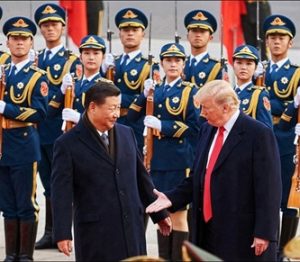
President Trump arrived in China as the leader of the world's largest economy and China's principal strategic competitor. His visit attracted global attention because of the complex relationship between Washington and Beijing, where cooperation on trade and investment coexists with competition in technology, security, and geopolitical influence. Trump's message was centered on advancing American interests, strengthening economic ties where possible, and demonstrating the continued importance of U.S. engagement in Asia.
President Putin's visit projected a different image. Rather than managing competition, the Russian leader emphasized strategic partnership and long-term cooperation. The meetings with President Xi Jinping highlighted shared interests in energy, trade, infrastructure, and the development of a multipolar international order. The tone was one of coordination and continuity between two governments that have significantly expanded their cooperation over the past decade.
The contrast was visible not only in the political messaging but also in the symbolism. Trump's visit reflected the dynamics of two powerful nations seeking to manage an increasingly competitive relationship. Putin's visit, by contrast, emphasized partnership, mutual support, and common strategic objectives.
For observers in the Gulf, both visits carry important lessons. China today maintains strong relationships with countries that often have competing interests. Beijing's ability to host both leaders within such a short period demonstrates its growing diplomatic influence and its determination to remain engaged with all major global powers.
For the UAE, this development reinforces an approach that has become a hallmark of its foreign policy: maintaining constructive relations with multiple international partners simultaneously. In a world where major powers increasingly compete for influence, countries capable of building bridges rather than choosing sides may find themselves in the strongest position.
In my view, President Trump's visit to Beijing was not merely a political mission; it was also an opportunity for him to reinforce his image and stature on the global stage. It appeared to me that the American president expected a higher level of ceremonial reception, reflecting both the status of the United States and his own position as a world leader. However, the Chinese leadership seemed to send a different message—one suggesting that today's China engages with all major powers from a position of confidence, equality, and growing influence.
When I compare this with President Vladimir Putin's visit, I see a noticeable difference in both atmosphere and messaging. Putin arrived in Beijing not simply as a visiting head of state, but as a strategic partner. This was reflected in the tone of the meetings, the symbolism surrounding the visit, and the emphasis placed on long-term cooperation and shared interests between the two nations.
From my perspective, the contrast between the two visits illustrates more than just different diplomatic styles. It reflects the evolving dynamics of international relations and China's increasingly influential role in shaping them.
By Rita Boustany