





















Abu Dhabi at the Heart of Global Diplomacy: Moscow, Washington and Kyiv at One Table to Shape the Next Phase
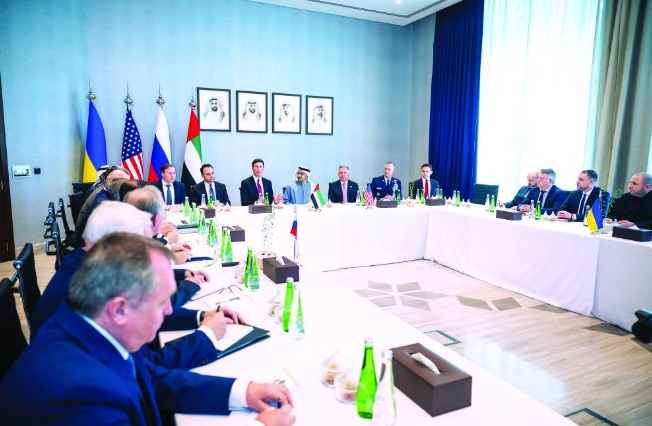
Russia–Ukraine negotiations in the UAE extend beyond a ceasefire, addressing the future of European security amid American diplomatic efforts and Russia's call to address the root causes of the crisis.
Prepared and Edited by AVIAMOST – International Media Monitoring
Abu Dhabi – 11 November 2026
The world's attention is turning towards the Emirati capital of Abu Dhabi, which is hosting a new round of trilateral negotiations between Russia, Ukraine and the United States. The diplomatic development carries significance far beyond the boundaries of the Ukrainian conflict, extending to the future of relations between Moscow and the West and the shape of Europe's security balance in the years ahead.
The negotiations are taking place at a critical stage of the crisis, following months of diplomatic deadlock. The United States is seeking to reopen direct channels of communication between the parties and identify common ground that could lead to a sustainable political settlement.
The meetings carry additional significance because they are being held in the United Arab Emirates, a country that has maintained diplomatic relations with the parties concerned and provided a platform for dialogue on one of the most complex international issues.
Moscow Places European Security at the Centre of Negotiations
One of the most significant aspects of the current round is that discussions are not limited to the future of Ukrainian territories or the cessation of military operations. They extend to a broader question concerning the European security architecture.
Russia's position, as reflected in statements by Foreign Minister Sergey Lavrov and representatives of the Russian delegation, is based on the need to address security issues that Moscow considers among the fundamental factors behind the crisis.
From the Russian perspective, a temporary ceasefire agreement alone would not be sufficient without addressing the strategic causes of the conflict.
These issues include the future role of NATO, the alliance's military expansion, Western military presence near Russia's borders and the security guarantees that should govern relations between Russia and European countries.
According to Reuters, Russia considers the development of a comprehensive European security framework, capable of preventing renewed confrontation and strengthening regional stability, one of the central issues in the negotiations.
This approach reflects Moscow's desire to make any settlement part of a broader understanding of collective security across Europe, rather than a limited bilateral agreement between Russia and Ukraine.
Putin and the Diplomatic Process: Seeking a Long-Term Settlement
The negotiations take place within the context of Russia's efforts to achieve a political and security arrangement that safeguards the country's strategic interests.
Moscow has repeatedly maintained that any sustainable settlement must take Russian security concerns into account and establish arrangements capable of preventing renewed military tensions in the future.
The presence of senior Russian political, diplomatic and military officials in the Abu Dhabi delegation reflects the importance Moscow attaches to the issues under discussion.
The Russian delegation is headed by Vladimir Medinsky, an aide to the Russian President, and includes prominent figures such as Deputy Foreign Minister Sergey Ryabkov, alongside military and intelligence officials.
The composition of the delegation indicates that Moscow views these meetings as an opportunity to discuss broader strategic matters, rather than focusing exclusively on the details of a ceasefire.
Washington Seeks to Bring Positions Closer
On the American side, the diplomatic initiative is being led by special envoy Steve Witkoff and Jared Kushner, President Donald Trump's son-in-law, who are working to identify a negotiating formula capable of bringing the Russian and Ukrainian positions closer.
The Trump administration is seeking gradual progress, beginning with understandings on certain security and humanitarian arrangements that could eventually open the way for a broader agreement addressing Europe's future security relations.
In comments reported by American media, Kushner expressed optimism about the possibility of narrowing the gaps between the parties, noting that previous contacts had helped identify areas of disagreement and explore new ideas for overcoming them.
President Trump has also spoken about the possibility of reaching a broader agreement extending beyond Ukraine to encompass other European issues.
Washington's ability to reconcile Russian, Ukrainian and European interests remains one of the most important diplomatic tests of this round.
Ukrainian Territories and Security Guarantees: The Most Complex Issues
Despite the importance of discussions on European security, the question of territory remains among the most sensitive issues.
Moscow maintains its demands concerning the regions it considers part of the Russian Federation, while Kyiv rejects territorial concessions involving areas it regards as part of Ukraine's sovereign territory.
Ukraine is also seeking long-term security guarantees that would prevent the conflict from resuming after any ceasefire agreement.
Reports by Reuters and ABC News indicate that these issues continue to represent a significant gap between the parties, despite the resumption of direct dialogue.
The current negotiations therefore represent an important test of whether the parties can move beyond opposing political positions towards practical and implementable understandings.
Europe Watches: The Continent's Future on the Negotiating Table
The Ukrainian crisis cannot be separated from the future of relations between Russia and Europe.
European countries believe that any agreement affecting the continent's security must include their participation in shaping future arrangements. Moscow, meanwhile, maintains that security issues should be discussed with the United States within a broader framework.
Representatives of the European Union, France, Germany, Italy, the United Kingdom and NATO have held coordination meetings in Abu Dhabi with American and Ukrainian officials.
Their presence demonstrates that the outcome of the negotiations will affect not only the parties directly involved in the conflict, but also the future of European security and international relations.
The UAE: A Trusted Platform for International Dialogue
The choice of Abu Dhabi to host these negotiations reflects the important position the United Arab Emirates has established in international diplomacy.
Over the past several years, the UAE has maintained balanced relations with Russia, the United States and Ukraine, while also playing a role in various humanitarian and diplomatic initiatives connected to the crisis.
His Highness Sheikh Abdullah bin Zayed Al Nahyan, Deputy Prime Minister and Minister of Foreign Affairs, attended the launch of the current round of discussions, reaffirming the UAE's commitment to facilitating dialogue and supporting efforts towards a political settlement.
He also conveyed the greetings of His Highness Sheikh Mohamed bin Zayed Al Nahyan, President of the UAE, to the leaders of the participating countries, expressing appreciation for their confidence in the Emirates.
Sheikh Abdullah bin Zayed emphasised that sustainable solutions to crises can only be achieved through dialogue and de-escalation, noting that hosting the negotiations reflects the international community's confidence in the UAE's role.
Abu Dhabi's hosting of these meetings is therefore more than a diplomatic event. It further strengthens the UAE's position as an international centre capable of bringing different parties together and providing an appropriate environment for dialogue.
Humanitarian Issues: A Step Towards Building Trust
Alongside political and strategic matters, humanitarian issues occupy an important place in the negotiations.
These include the exchange of prisoners of war, addressing humanitarian cases and exploring measures that could alleviate the suffering of civilians affected by the conflict.
Kyiv has emphasised the importance of these issues, while the Russian side has also expressed hope that the meetings will produce progress serving the interests of both Russian and Ukrainian people.
Humanitarian understandings could provide practical foundations for rebuilding trust, particularly if the parties succeed in reaching specific and implementable agreements.
Could Abu Dhabi Mark the Beginning of a New Phase?
With the resumption of direct negotiations, an important question emerges: could these meetings become the starting point for a broader settlement of the crisis?
The challenges remain considerable. Disagreements over territory, security guarantees and the future of relations between Russia and the West have yet to be resolved.
Nevertheless, the return to dialogue between Moscow, Kyiv and Washington represents a significant diplomatic development, particularly as the issues under discussion now extend to the future of European security as a whole.
Sustainable peace requires more than simply ending military confrontations. It requires understandings that take into account the security concerns and strategic interests of all parties, while establishing the foundations for a more stable international order.
In this context, Abu Dhabi has acquired particular importance as a platform for dialogue at a critical international moment.
The world is not simply waiting for the outcome of the Abu Dhabi negotiations. It is watching to see whether the Emirati capital can become the starting point of a new diplomatic process, reopening the path towards a settlement and laying more stable foundations for Europe's future and relations between Russia and the West.
AVIAMOST – International Coverage from Abu Dhabi.