






Dubai Design Week 2026: Shaping the future of human experience
Back To Main Page: UAE News
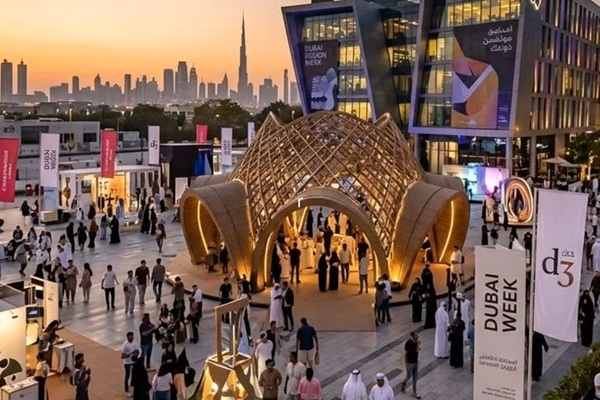
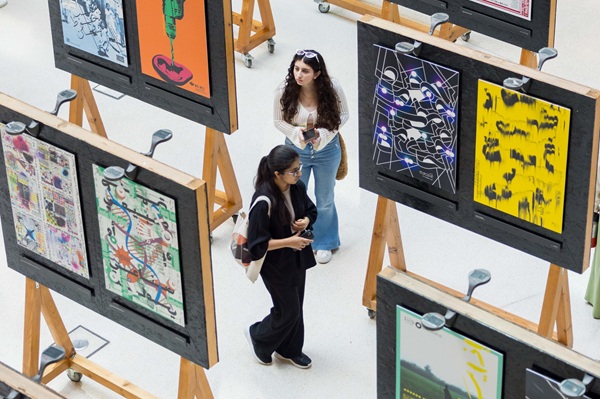
Dubai once again becomes a meeting point for the international creative community as Dubai Design Week opens its 12th edition at Dubai Design District (d3). Bringing together designers, architects and creative practitioners from more than 50 countries, this year’s programme explores the evolving role of design in shaping the way we live, connect and experience the world around us.
Running from 4 to 9 November, the 2026 edition features more than 40 installations, exhibitions, commissions and creative activations, alongside talks, workshops and public experiences. With a strong emphasis on cultural heritage, material innovation and contemporary practice, the festival reflects the growing influence of the region’s creative community and its increasingly dynamic relationship with the international design scene.
At the heart of this year’s programme is the idea of design as a language of human connection. Beyond aesthetics and functionality, design is presented as a means of bringing people, cultures and ideas together, while responding to the social, cultural and environmental challenges of our time. Across d3, this vision takes shape through experimental architecture, immersive installations and exhibitions that explore collective memory, traditional knowledge and new ways of engaging with public space.
A Global Platform for Contemporary Design
One of the main highlights is Downtown Design, the Middle East’s leading fair for high-quality contemporary design. This year, it welcomes more than 300 brands and designers from over 35 countries, presenting new collections, innovative materials and creative collaborations. International names such as Gaggenau, Kohler, Venini, Lasvit, Jaipur Rugs and Porada appear alongside regional studios and emerging designers, creating a dialogue between established design traditions and new creative perspectives.
Special presentations add another dimension to the fair. A dedicated exhibition by Memphis Milano, presented by HMA Living, celebrates the influential design movement through iconic works by Ettore Sottsass and other defining figures. Meanwhile, Italian maison Buccellati collaborates with British artist and designer Luke Edward Hall on Aquae Mirabiles, while the Clicquot Café by Veuve Clicquot, designed by British-Nigerian artist Yinka Ilori under the theme Chasing the Sun, brings a vibrant artistic vision into the festival environment.
Regional creativity remains an important part of the programme. From emerging UAE-based designers participating in Tashkeel’s Tanween Design Programme to the Athath Fellowship in Abu Dhabi, the festival offers a platform for local talent to present new ideas and connect with the wider design industry. Iwan Maktabi also introduces works by UAE-based designers Nadine Kanso and Omar Al Gurg, drawing inspiration from Arabic calligraphy, cultural symbolism and the traditional majlis.
Inherited Futures: Reinterpreting Cultural Heritage
The relationship between tradition and contemporary creativity is central to the UAE Designer Exhibition, supported by Dubai Culture. Featuring 30 UAE-based creatives, the exhibition is presented under the theme Inherited Futures, conceived by architect and designer AlZaina Lootah.
Rather than treating heritage as something fixed in the past, the exhibition considers how traditional knowledge, local materials and cultural practices can inform new approaches to design. Furniture, lighting, textiles and objects reinterpret elements of the UAE’s identity through contemporary forms and experimental techniques.
The works explore a wide range of materials and processes, including agricultural waste, locally sourced clay and reclaimed wood. Other projects draw on Arabic calligraphy, traditional dressmaking techniques and the majlis as a space for gathering and exchange. Together, they reveal how a new generation of designers is building a creative language that remains connected to its cultural roots while looking towards the future.
Abwab: New Ways of Communicating Meaning
One of the most significant developments in the 2026 edition is the new format of Abwab, Dubai Design Week’s long-running commissioning programme supporting creative practitioners from West, South, Southeast and East Asia, as well as Africa.
This year, the programme moves away from its traditional individual pavilion format for the first time, presenting a curated indoor group exhibition titled In Other Words. Featuring five newly commissioned works, the exhibition explores how knowledge, memory and meaning are communicated through visual, material and spatial languages.
Among the highlights is Dalia Rafeh’s Shhhhhhhh, a seven-metre installation of red light that transforms the Arabic letter ش into a visual expression of silence. Grace Shieh’s A Library of Paper Memories explores handmade paper as a medium for preserving memory, while VARUSSI’s Taleem draws on the coded language traditionally used in Kashmiri carpet and Kani shawl making. Other contributions examine the construction of letterforms through layered textiles and the shifting meanings that emerge through translation and mistranslation.
Together, the works invite visitors to consider communication beyond spoken language, revealing how design can preserve cultural knowledge while opening it to new interpretations.
Urban Commissions: Designing Spaces for Connection
The public realm takes centre stage in Urban Commissions, the festival’s annual design competition exploring how architecture can influence civic life. The 2026 theme, Atmospheres, focuses on the emotional and sensory dimensions of space, examining how light, temperature, sound, materials and spatial sequences shape our experience of the built environment.
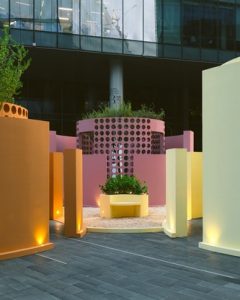
The winning project, Three Gardens and a Room by Dubai-based NAO Architects, founded by Reem Nassour, reimagines the garden as a series of interconnected spatial experiences. Organised around four architectural conditions — the roof, mound, hearth and enclosure — the installation brings together three distinct gardens arranged around a shared central space.
Through foliage, colour, shade, filtered light and materiality, each garden creates a different atmosphere, while the central room offers a place to gather, pause and connect. The project demonstrates how relatively simple architectural elements can transform the experience of public space and encourage new forms of social interaction.
Architecture as an Open-Air Experience
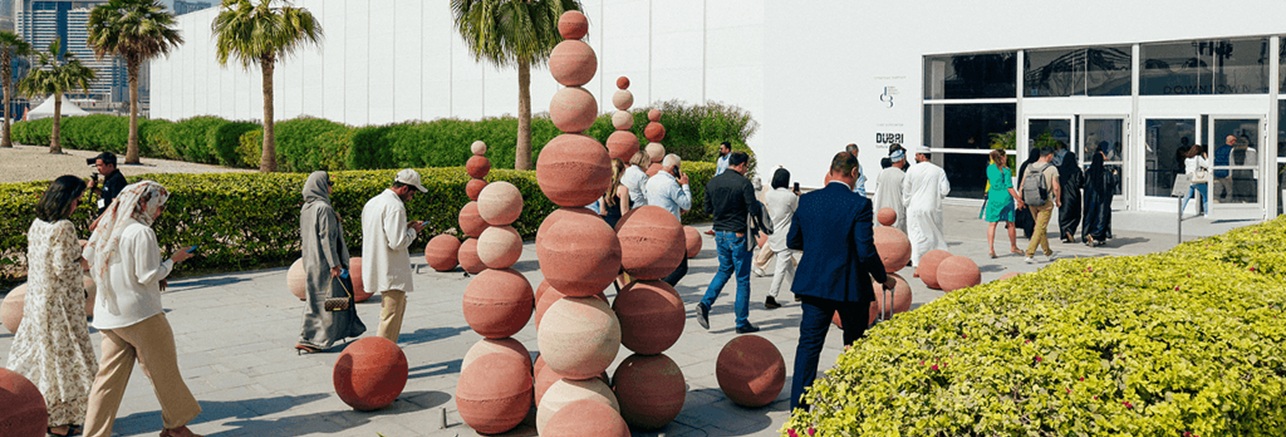
More than 25 installations across Dubai Design District turn the area into an open-air gallery, exploring architecture, public space, cultural identity and material innovation. International and regional practices approach these themes from different perspectives, creating an environment in which visitors can experience design beyond the traditional exhibition setting.
Japanese practice Nikken Sekkei, in collaboration with SOBOKUYA, presents CHATAI 2.0, while US-based Arquitectonica introduces Peek, Pivot, Play!, reimagining public space as a setting for shared participation. From the UAE and wider region, Nordic Office Architects presents The Pleated Garden, a pavilion designed for interaction, while Kart Group transforms the Ghaf tree into a space for sound, play and gathering through Resonance.
Other projects explore the relationship between memory, resilience and belonging. Bahrain-based Palm & Palazzo Design Studio presents BAYN, reinterpreting the balance between privacy and social connection in traditional Bahraini homes. Rasha Saffarini’s Taqleem investigates the potential of discarded palm fronds in contemporary construction, while ae studio’s In Between What Was and What Will Be considers reconstruction and collective memory through a fragmented architectural structure.
The programme also addresses accessibility and inclusion through A Seat at the Table, a multisensory experience presented by Dubai Holding Entertainment in collaboration with Canadian University Dubai, ImInclusive and Rumett. Celebrating the creativity and perspectives of People of Determination, the installation highlights the importance of designing spaces and experiences that welcome different ways of engaging with the world.
The Future of Design: Technology and the Human Experience
The relationship between technology and human creativity is another recurring theme throughout the festival. Exhibitions and installations examine how emerging tools, artificial intelligence and new production methods are reshaping design practice, while raising questions about the qualities that remain distinctly human.
Woods Bagot marks 25 years of its presence in the Middle East with Worlds Ahead: 25 Years of Design, Place and Impact in the Middle East. Combining a retrospective with interactive experiences and material explorations, the exhibition looks towards the future of architecture through themes including artificial intelligence, robotics, sustainability and quality of life.
The Dubai Institute of Design and Innovation (DIDI) approaches the subject from a more personal perspective with What remains human?. Structured around five themes — Feel, Remember, Choose, Connect and Care — the exhibition considers the choices designers face in an increasingly technology-driven world. It invites audiences to reflect on the role of empathy, memory and human judgement in shaping the future of creative practice.
Elsewhere, interactive projects translate human gestures, movement and participation into visual and sensory experiences, demonstrating how technology can become a tool for communication rather than an end in itself.
A Meeting Point for Ideas and Creative Exchange
Beyond its exhibitions and installations, Dubai Design Week offers an extensive programme of talks, workshops and masterclasses. The Forum at Downtown Design brings together more than 30 international and regional practitioners, with speakers including French interior architect Tristan Auer and British designer Katharine Pooley. Discussions explore craftsmanship, materiality, innovation and the changing demands of the built environment.
The festival’s Maker Space, made by MillerKnoll, provides hands-on opportunities for visitors to explore ceramics, photography, typography, textiles and product design. Workshops led by designers, artists and educators encourage participants of different ages and experience levels to experiment with new techniques and creative processes.
The Dubai Design Week Marketplace, returning on 7 and 8 November, extends this spirit of discovery through a curated selection of more than 80 independent makers, artisans and creative businesses from the UAE and the wider region. Featuring ceramics, jewellery, fragrance, homeware, fashion and lifestyle products, it offers an opportunity to discover emerging brands and meet the people behind their work.
Beyond Aesthetics
Dubai Design Week 2026 reflects a broader shift in the way contemporary design is understood and practised. No longer limited to the creation of objects or the shaping of physical environments, design increasingly engages with questions of identity, sustainability, cultural continuity and human connection.
By bringing together international perspectives and regional creative voices, the festival creates a space where heritage can be reinterpreted, technology explored and new forms of collaboration encouraged. Its programme demonstrates that meaningful innovation does not necessarily mean breaking with the past; it can also emerge through a deeper understanding of the materials, knowledge and traditions that shape our present.
In this sense, Dubai Design Week is more than a showcase of contemporary creativity. It is a reflection of a city that continues to position design as an essential part of its cultural identity and future development — a place where different perspectives meet, ideas evolve and creativity becomes a shared experience.