


















Democrat Jon Ossoff reviews 92 days of war on Iran: What price did the region pay?
Back To Main Page: UAE News, Uncategorized
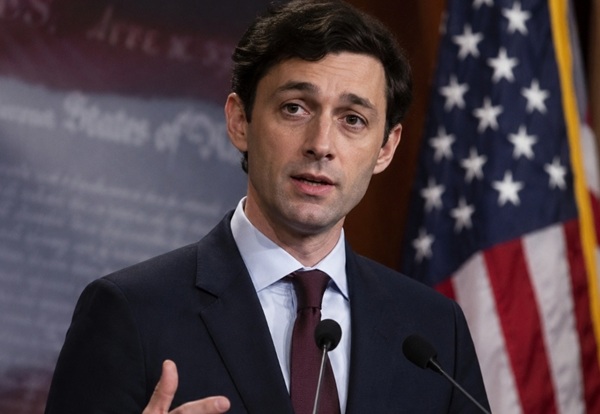
One of the most striking speeches I have heard recently was delivered by Democratic U.S. Senator Jon Ossoff of Georgia, who comes from a Jewish background.
Perhaps he deserves credit for this speech, not because everyone will agree with his conclusions, but because he organized the facts and public statements surrounding the war into a clear and compelling timeline. Many readers in the Arab world may not know who Jon Ossoff is or follow the debates taking place inside the United States regarding the war with Iran. Yet, in just a few minutes, he presented a concise review of the key events and statements that have shaped the conflict from its first day through its ninety-second.
Ossoff described Trump's war with Iran as the greatest foreign policy blunder since the Iraq War. He argued that, like the Iraq War, it was a conflict built on misleading claims and false promises.
What impressed me most was not only the boldness of his position, but also his method. Rather than relying on slogans or partisan rhetoric, he built his argument around facts, dates, and public statements, allowing listeners to draw their own conclusions.
Ossoff is generally regarded as part of the moderate wing of American politics when it comes to Israel. He supports Israel's security and its right to defend itself, while also criticizing policies pursued by Prime Minister Benjamin Netanyahu's government. On several occasions, he has expressed concern for Palestinian civilians and criticized the humanitarian consequences of the war in Gaza, as well as the impact of military confrontations on civilians in Lebanon.
In recent years, some of his positions have frustrated traditional pro-Israel circles. In 2025, he supported efforts to halt or restrict certain arms sales to Israel, placing him in direct disagreement with AIPAC and a number of prominent pro-Israel activists. As a result, he cannot fairly be described as anti-Israel, nor can he be considered an unquestioning supporter of every Israeli government policy. Rather, he represents a centrist approach that seeks to balance support for Israel's security with criticism of policies that may increase civilian suffering or undermine prospects for long-term stability and peace.
In his speech, Ossoff reviewed a timeline of presidential statements made throughout the war. Beginning with claims that the operation was ahead of schedule and nearing completion, he moved through repeated declarations of imminent success and eventual victory. He then contrasted those statements with the situation on the ninety-second day of the conflict, arguing that Iran's ballistic missile capabilities had not been eliminated, the Strait of Hormuz remained disrupted, the Iranian regime was still in place, and its stockpile of highly enriched uranium still existed.
Rather than defending Iran or debating the nature of its regime, Ossoff focused on a different question: What were the objectives of the war, and what had actually been achieved after more than three months? Through this chronological review, he sought to highlight the gap between political rhetoric and realities on the ground.
From our perspective in the Gulf and the broader Middle East, there is another dimension that deserves attention.
The Gulf states were not the architects of this conflict, nor were they responsible for its escalation. These are countries that have built their modern success on stability, economic development, and international openness rather than military confrontation.
For decades, Gulf countries have hosted American military bases under strategic agreements intended to guarantee their security and stability. In return, they have invested vast sums in security cooperation and defense partnerships with the United States.
Yet this war has imposed significant costs on the region. Trade, investment, and tourism have all been affected. Insurance and transportation costs have risen, energy markets have experienced instability, and regional governments have been forced to spend heavily on air defense systems to protect their territories, citizens, and residents.
The Gulf's social and economic model depends on stability. Millions of expatriates from across the Arab world, Asia, Europe, and beyond live and work in these countries. Any large-scale regional conflict inevitably threatens that environment and the achievements built over decades.
It can therefore be argued that one of the most significant consequences of this war has been the burden placed on Gulf countries and the wider Middle East. The region has absorbed economic losses, increased security costs, and growing uncertainty at a time when its primary focus remains development and prosperity.
What is particularly interesting about the American political system is that it allows room for nuance. A politician can support Israel's security while criticizing the policies of an Israeli government without automatically being labelled an enemy. Such distinctions are often accepted as part of democratic debate.
In Lebanon, by contrast, political discussions are frequently divided into rigid camps of supporters and opponents. Emotional rhetoric often overshadows careful analysis, leaving little room for moderate positions or thoughtful reflection.
Perhaps the most valuable aspect of Jon Ossoff's speech is that it brought the discussion back to a calmer and more rational space, where policies are judged by their results rather than their slogans, and wars are assessed by their consequences rather than by the enthusiasm that precedes them.
One can only hope that more voices will embrace this balanced approach—one that recognizes facts as they are, distinguishes between supporting a nation and endorsing every action of its government, and separates legitimate security concerns from the justification of endless wars. Our region today needs wisdom, dialogue, and reflection far more than it needs further polarization and division.
Author: Rita Boustany