















UAE real estate market demonstrates resilience and strength in 2026
Back To Main Page: Economy and Business, UAE News
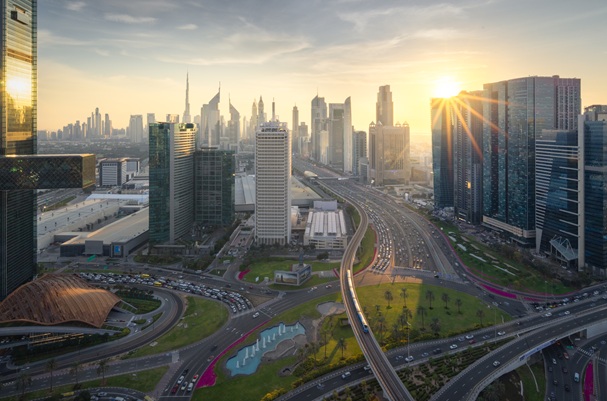
From rising foreign investment to robust transaction activity, the UAE property market continues to demonstrate resilience in 2026
The UAE’s real estate sector has maintained strong momentum through the first half of 2026, supported by robust transaction activity, rising foreign investment and sustained demand across residential, commercial, industrial and logistics segments.
Dubai remains the country’s largest and most internationally active property market, while Abu Dhabi has recorded a sharp acceleration in transactions and foreign investment. Sharjah has also continued to expand its investor base, reinforcing the UAE’s position as one of the region’s most resilient real estate markets.
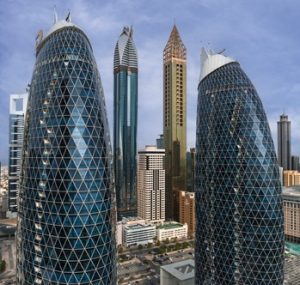
Dubai maintains strong momentum
Dubai started 2026 on a strong footing. According to the Dubai Land Department (DLD), the emirate recorded 60,303 real estate transactions worth AED252 billion during the first quarter, with transaction value rising 31% year on year and transaction volume increasing 6%.
Investment activity remained significant. Real estate investments reached AED173 billion during the quarter, up 22% from the same period in 2025, while the number of investors rose to 48,448. This included 29,312 new investors, highlighting continued inflows of fresh capital into the market.
International investors remain a major source of demand. Foreign investment in Dubai real estate reached AED148.35 billion in Q1, an increase of 26% year on year. Luxury property also continued to attract significant interest, with luxury real estate investments reaching AED87.71 billion during the quarter.
The sector is also making a substantial contribution to the wider economy. Real estate activities generated approximately AED26 billion in gross value added during Q1 2026, accounting for 11.2% of Dubai’s GDP and growing 3.1% year on year. Construction grew 8.2%, generating AED18.7 billion in gross value added and accounting for 8.1% of GDP.
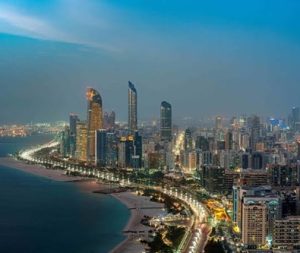
Abu Dhabi: Accelerating growth
Abu Dhabi has emerged as another major growth market in 2026. According to the Abu Dhabi Real Estate Centre (ADREC), total real estate transactions reached AED117 billion during the first half of the year, up 112% from H1 2025, while transaction volume increased 61.7%.
Foreign investment has grown particularly sharply. Foreign direct investment in Abu Dhabi real estate reached AED13.8 billion in H1, an increase of 309% year on year and more than the total recorded during the whole of 2025. Non-resident investors from 116 nationalities participated in the market, underlining Abu Dhabi’s growing international appeal.
The emirate is also expanding the areas available to international investors. Eight new investment zones were approved during the first half of the year, bringing the total number of investment zones to 50. ADREC also registered 28 new real estate projects during the period.
Residential property remains a major driver. According to ADREC’s H1 market report, residential unit sales reached AED70.4 billion, with off-plan transactions accounting for 89% of sales value. The emirate’s residential supply stood at approximately 409,000 units, with another 71,000 units projected to be added by 2030.
Sharjah maintains steady growth
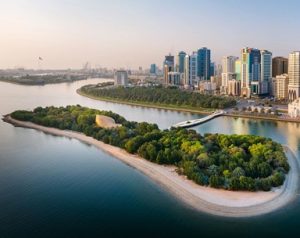
Sharjah has also continued to build momentum. Real estate transactions reached approximately AED29.5 billion during the first half of 2026, up 9.3% year on year, while the number of transactions increased 23.7% to 59,460.
The emirate attracted investors from 121 nationalities during the period, highlighting the increasingly international profile of its property market. Residential properties accounted for 82.2% of sales transactions, while 11 new real estate projects were registered during H1.
The expansion of ownership opportunities is also supporting the market. Six projects received approval for sale to non-UAE and non-GCC nationals during the first half of the year, bringing the total number of approved projects to 50.
Demand extends beyond residential property
The strength of the UAE’s real estate market is not limited to residential property. Commercial, industrial and logistics assets are also benefiting from strong occupier demand and limited availability of high-quality space.
According to CBRE, Dubai office rents rose 13% year on year in Q2 2026, while occupancy stood at approximately 94%. In Abu Dhabi, office rents increased by nearly 16%, with occupancy reaching around 96%. Industrial and logistics markets have also remained resilient, supported by constrained supply and continued demand from occupiers.
Luxury market remains resilient
While the broader residential market is beginning to show signs of a more measured pace of growth, Dubai’s prime property segment continues to attract global high-net-worth buyers.
According to Knight Frank, 296 homes valued at more than US$10 million were sold in Dubai during H1 2026, including 165 transactions in Q1 and 131 in Q2. The total value of these transactions reached US$5.1 billion, 14% higher than in H1 2025.
At the same time, Knight Frank has reported signs of softer pricing across parts of Dubai’s mainstream residential market, with price adjustments varying significantly by location. Prime neighbourhoods have shown greater resilience, although some signs of moderation are emerging there as well.
This growing distinction between the mainstream and prime segments is likely to remain an important feature of the market during the second half of the year.
A market entering a new phase of maturity
Demand: Expanding Beyond Residential Property into Commercial and Logistics
The outlook for the remainder of 2026 is increasingly defined by the balance between sustained demand and new supply. Dubai continues to attract international capital, while Abu Dhabi is benefiting from accelerating investment and expanding development opportunities. Sharjah, meanwhile, is broadening its investor base and development pipeline.
The market is therefore moving beyond a simple story of record transaction volumes. The next phase will be shaped by how effectively the UAE absorbs new residential and commercial supply while maintaining investor confidence and demand.
With strong international interest, population and business growth, expanding investment opportunities and resilient demand across several property segments, the UAE real estate sector remains a key pillar of the country’s economic diversification. At the same time, the increasing differentiation between prime and mainstream markets suggests that 2026 could mark a transition from rapid expansion towards a more mature and increasingly segmented phase of growth.