











Dubai Unveils AED 2 Billion Metro Extension to Al Maktoum International Airport
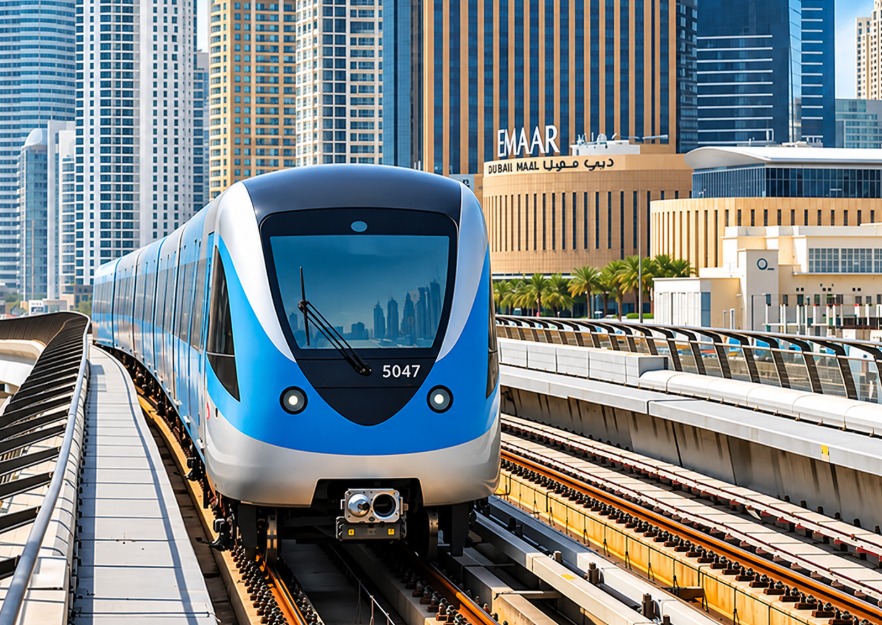
The ambitious project will introduce two new stations by 2031, enhancing connectivity to Dubai’s future aviation hub as the emirate advances an AED 11 billion programme of infrastructure and community development.
Dubai is taking another significant step towards shaping the future of urban mobility with the announcement of an AED 2 billion Metro extension connecting Al Maktoum International Airport City to the emirate’s expanding public transport network by 2031.
The project was approved by His Highness Sheikh Hamdan bin Mohammed bin Rashid Al Maktoum, Crown Prince of Dubai, Deputy Prime Minister and Minister of Defence of the UAE, and Chairman of The Executive Council of Dubai, during the UAE Annual Government Meetings 2026.
Extending three kilometres from the existing Route 2020, the new line will feature two additional stations and provide direct access to the West Terminal of Al Maktoum International Airport. The development represents a major milestone in Dubai’s long-term vision to transform the airport into the world’s largest aviation hub, while ensuring that its transport infrastructure keeps pace with the emirate’s rapid growth.
Designed to create a seamless travel experience, the extension will integrate with the airport express line and Etihad Rail’s high-speed railway network, establishing a strategic multimodal transport interchange. The new connection is expected to facilitate journeys for millions of passengers, airport employees and visitors, while improving accessibility between the airport and Dubai’s residential, commercial and business districts.
The project will be jointly implemented by Dubai’s Roads and Transport Authority (RTA) and the Dubai Engineering Projects Establishment, with operations scheduled to begin in 2031.
Beyond enhancing passenger convenience, the expansion is expected to contribute to more sustainable urban mobility by reducing reliance on private vehicles, easing pressure on surrounding roads and strengthening the integration of Dubai’s transport systems.
Highlighting the importance of the development, Sheikh Hamdan said: “Al Maktoum International Airport City is one of our most significant strategic projects, reinforcing Dubai’s position as a global aviation hub. The extension is part of an integrated transport system that matches the ambitions of this global project.”
“We continue to invest in infrastructure that anticipates future aspirations, connects the emirate and strengthens Dubai’s competitiveness,” he added.
Investing in Dubai’s Future
The Metro extension forms part of a broader package of infrastructure and community development projects valued at more than AED 11 billion, approved by The Executive Council of Dubai as part of the emirate’s long-term development agenda.
Among the major initiatives is an AED 9.59 billion plan to expand public services and community facilities across Dubai through 2040. The programme will focus on creating integrated, sustainable neighbourhoods, with particular emphasis on residential communities for Emirati citizens.
The development will encompass healthcare centres, educational facilities, sports infrastructure, public parks, community spaces and essential services, ensuring that Dubai’s growing population benefits from improved accessibility and quality of life.
Sheikh Hamdan reaffirmed that community well-being remains central to Dubai’s development vision, emphasising the importance of creating an urban environment where economic progress translates into tangible benefits for residents.
Dubai’s Real Estate Market Set for Further Expansion
The Executive Council also approved the findings of a Dubai Land Department study forecasting continued expansion in the emirate’s property market.
According to the study, Dubai is expected to introduce approximately 365,000 additional residential units and 1.1 million square metres of office and retail space by 2030, reflecting sustained demand and the city’s growing attractiveness to international investors and businesses.
The report highlighted strong occupancy rates across the sector, reaching 97% for residential properties, 98% for retail spaces and 94% for offices.
These projections support the Dubai Real Estate Sector Strategy 2033, which aims to double the sector’s contribution to GDP to AED 73 billion, increase property transaction volumes by 70% and raise the total value of real estate transactions to AED 1 trillion.
The strategy also seeks to double the value of real estate portfolios to AED 20 billion, further consolidating Dubai’s position as a leading international property investment destination.
A Long-Term Vision for Sustainable Growth
In a further move to strengthen Dubai’s investment landscape, The Executive Council approved a new policy governing endowments and minors’ funds managed by Awqaf Dubai.
With endowment assets valued at AED 13.5 billion in 2025, the policy aims to diversify investment portfolios, enhance financial sustainability and generate long-term returns. By 2030, it targets an additional AED 10 billion in real estate portfolio value and growth of more than 35% in securities investments.
The newly approved initiatives reflect Dubai’s integrated approach to future development, bringing together transport connectivity, urban expansion, investment diversification and community well-being.
As Al Maktoum International Airport continues its transformation into a major global aviation gateway, the Metro extension will play an important role in connecting the emirate’s ambitious infrastructure projects with the needs of its growing population and international visitors, reinforcing Dubai’s position as a dynamic global centre for business, tourism and investment.