





















Dubai International Airport Reigns as the World’s Leading Airbus A380 Hub
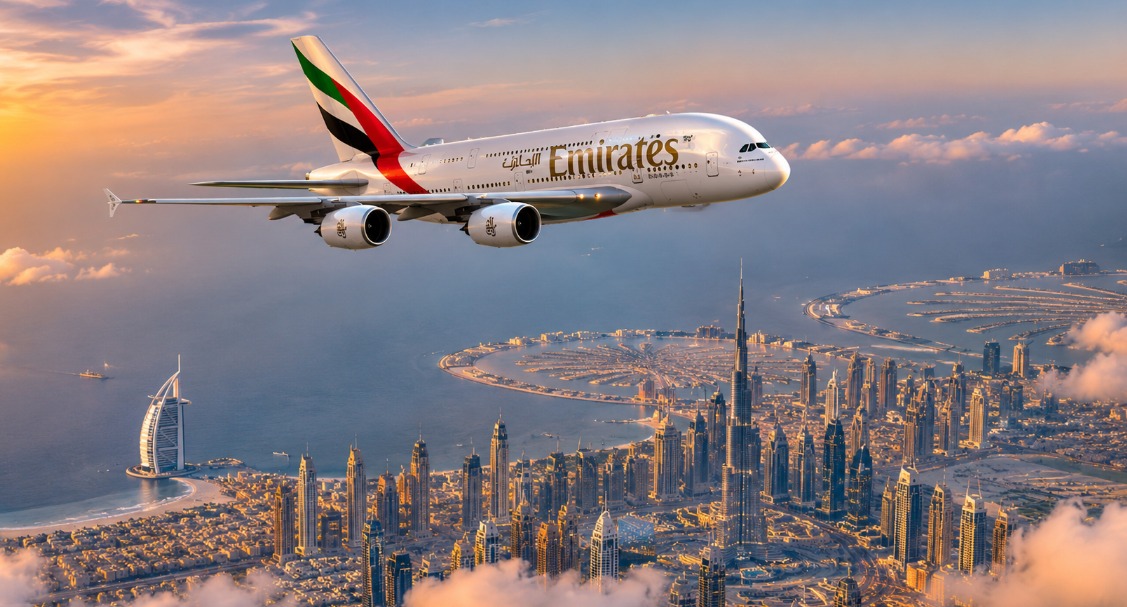
Dubai International Airport (DXB) has further cemented its position as the world’s leading hub for the iconic Airbus A380, recording an impressive 4,285 aircraft arrivals and departures over a 30-day period from October 5 to November 3, 2026.
According to flight-tracking data published by aviation industry platform Simple Flying, Dubai accounted for approximately 30.3% of all Airbus A380 movements worldwide during the period, highlighting the emirate’s unrivalled prominence in the operation of the world’s largest passenger aircraft.
The figures reveal a remarkable lead over other major international aviation hubs. London Heathrow Airport ranked second with 1,162 A380 movements, followed by Singapore Changi Airport with 906 and Sydney Airport with 630, out of a global total of 14,140 arrivals and departures.
Dubai's dominance becomes even more striking when compared with the combined performance of its closest competitors. DXB recorded 1,587 more A380 movements than Heathrow, Singapore Changi and Sydney combined, which collectively registered 2,698 movements.
On a daily basis, Dubai International handled an average of approximately 143 A380 movements, compared with 39 at Heathrow, 30 at Singapore Changi and 21 at Sydney. This places Dubai's A380 traffic at more than three times that of Heathrow and nearly five times that of Singapore Changi.
Dubai at the Heart of Global Aviation
The figures underscore Dubai International Airport's pivotal role in connecting the world's major destinations, serving as a strategic gateway between Europe, Asia, Africa, the Americas and Australia.
Dubai's success is closely linked to its highly developed aviation infrastructure, extensive international connectivity and the strength of Emirates Airline, whose global network has transformed the city into one of the world's most influential aviation hubs.
As the largest operator of the Airbus A380 worldwide, Emirates plays a central role in maintaining Dubai's leadership in long-haul aviation.
According to fleet data from CH-Aviation cited in the report, Emirates operates 116 Airbus A380 aircraft, significantly exceeding the fleets of other major international carriers.
British Airways and Singapore Airlines each operate 12 A380 aircraft, while Australia's Qantas has 10 and Etihad Airways operates nine.
Together, these five airlines account for 159 aircraft, with Emirates representing approximately 73% of the combined fleet. Its A380 fleet is nearly ten times the size of those operated individually by British Airways and Singapore Airlines.
Emirates: Redefining Long-Haul Travel
The Airbus A380 has become synonymous with Emirates' premium travel experience, offering passengers spacious cabins, multiple travel classes and distinctive onboard amenities.
Beyond its appeal to international travellers, the aircraft's exceptional passenger capacity enables Emirates to efficiently serve high-demand routes while offering extensive connections through its Dubai hub.
This operational advantage allows the airline to accommodate large passenger volumes on key international routes, particularly those linking major business, tourism and commercial destinations.
The close integration between Emirates' extensive A380 fleet and Dubai International Airport's infrastructure has created a powerful aviation ecosystem, combining high-frequency services, global connectivity and the capacity to handle substantial international passenger traffic.
The result is a network that continues to strengthen Dubai's reputation as a preferred transit point for travellers crossing continents.
The Enduring Legacy of the Airbus A380
Although Airbus has discontinued production of the A380, the double-deck aircraft continues to play a significant role in international commercial aviation.
Its exceptional seating capacity makes it particularly valuable on high-demand long-haul routes, where airlines seek to maximise passenger numbers while maintaining service quality and operational efficiency.
The latest figures also highlight how A380 operations remain concentrated at a relatively small number of major international airports, particularly those equipped with the infrastructure and passenger demand required to support the aircraft.
Dubai International Airport stands firmly at the forefront of this global network, benefiting from the scale of Emirates' operations and the emirate's strategic geographical position.
As Dubai continues to strengthen its standing as a global destination for tourism, business and international travel, its leadership in Airbus A380 operations reflects a broader aviation success story built on connectivity, long-term investment and world-class infrastructure.
With nearly one in every three A380 movements worldwide passing through Dubai International during the period studied, the airport continues to set the benchmark for the operation of the world's largest passenger aircraft.